
By Elizabeth McIlhenney, Wilson College Archivist
The Wilson College Author’s Hall of Fame celebrates members of the Wilson community who have made significant contributions to the literary tradition and culture of the College. Their names are added to the honorary plaque displayed in the John Stewart Memorial Library, and their books become part of the library’s special Author’s Wall collection.
This year, Wilson honored alumna Margaret “Peg” Masland Lavin ‘31 with induction into the Author’s Hall of Fame.
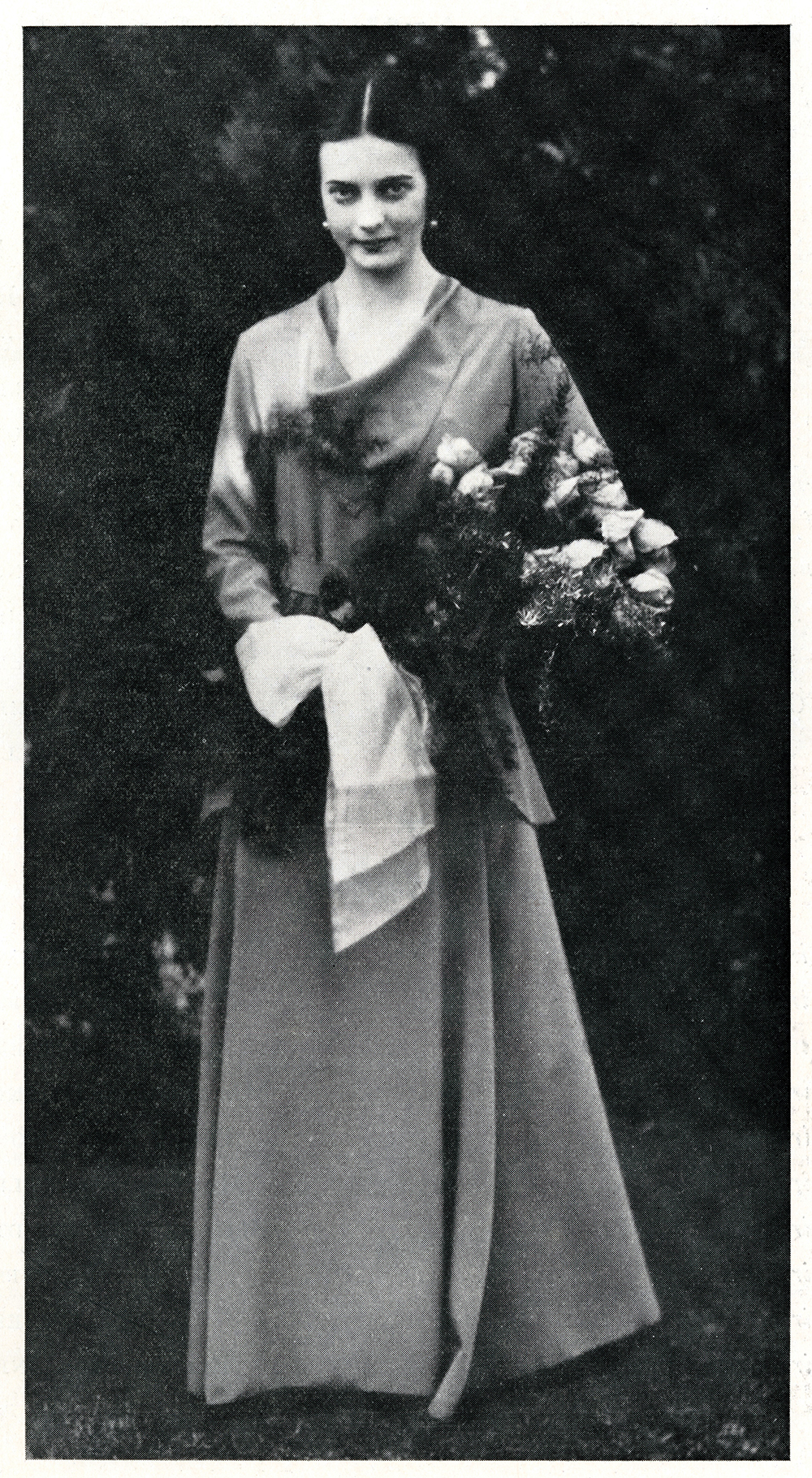
Author Margaret “Peg” Masland Lavin (1910-1967) was highly involved in campus life during her four years at Wilson College. She served on Student Council all four years; was secretary of the Chi Tau Pi Literary Society during her junior year; worked as assistant literary editor for the 1931 yearbook; and spent three years on the staff of The Pharetra literary magazine, ultimately serving as editor-in-chief during her senior year.
Many of her written works were published in The Pharetra during her time as a Wilson College student. Of the numerous pieces that she published, about half were dramatic plays, while the remainder included essays, editorials, and a book review. One of her plays, “Even in my Lettuce Bed,” won a campus one-act play contest in 1931 for which she won five dollars. The play was presented by the Kittochtinny Players later that year.
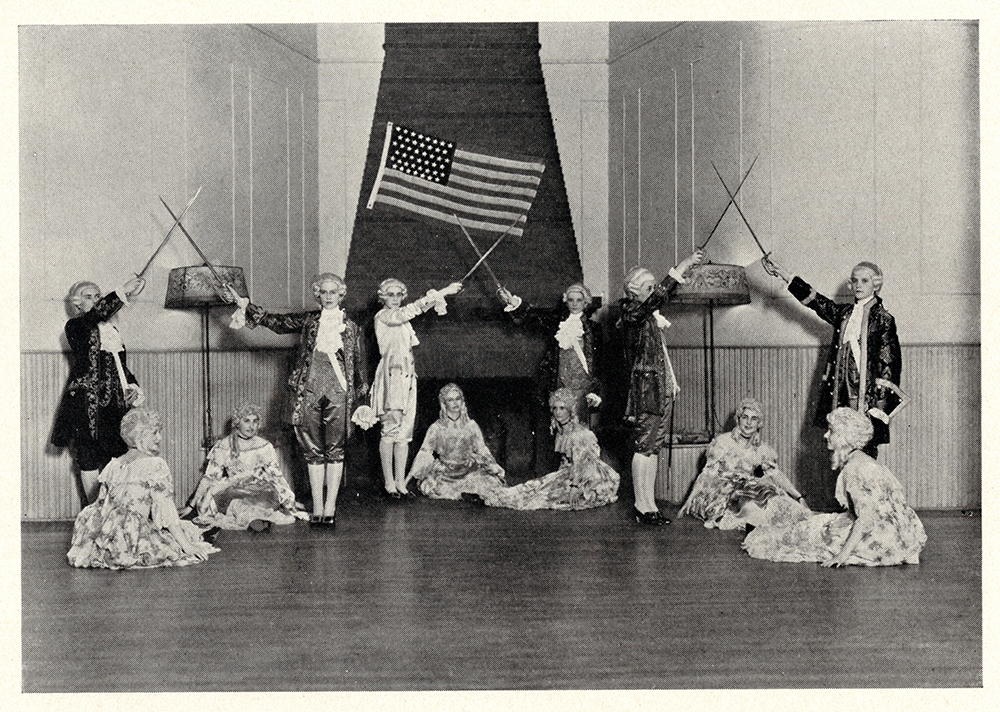
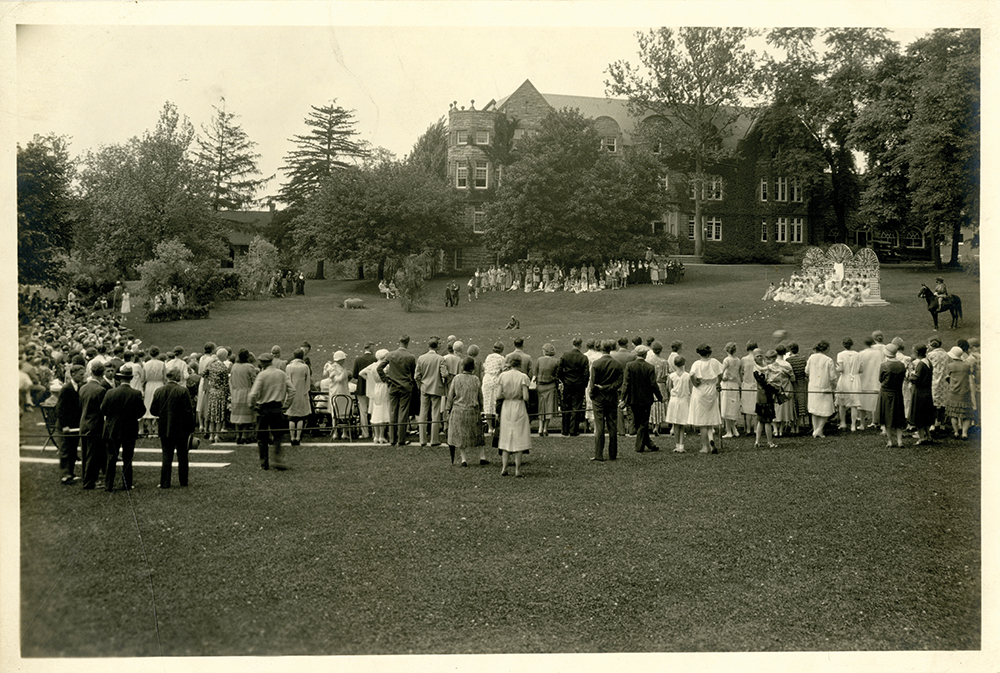
In addition to her literary activities, she served on numerous campus committees, appeared in pageants and theatrical productions, and was a member of the May Day court each year, serving as Maid of Honor in 1931. She also danced the minuet for George Washington’s Birthday during her junior and senior years, a much-loved campus tradition at the time.
After graduating magna cum laude in 1931 with a degree in English, she married Jules Charles Lavin in 1933, who later worked as vice president of Masland Duraleather Co. and served on its board of directors for 22 years before retiring in 1963. Together they had two children, Peter Masland Lavin and Katharine Masland Lavin.
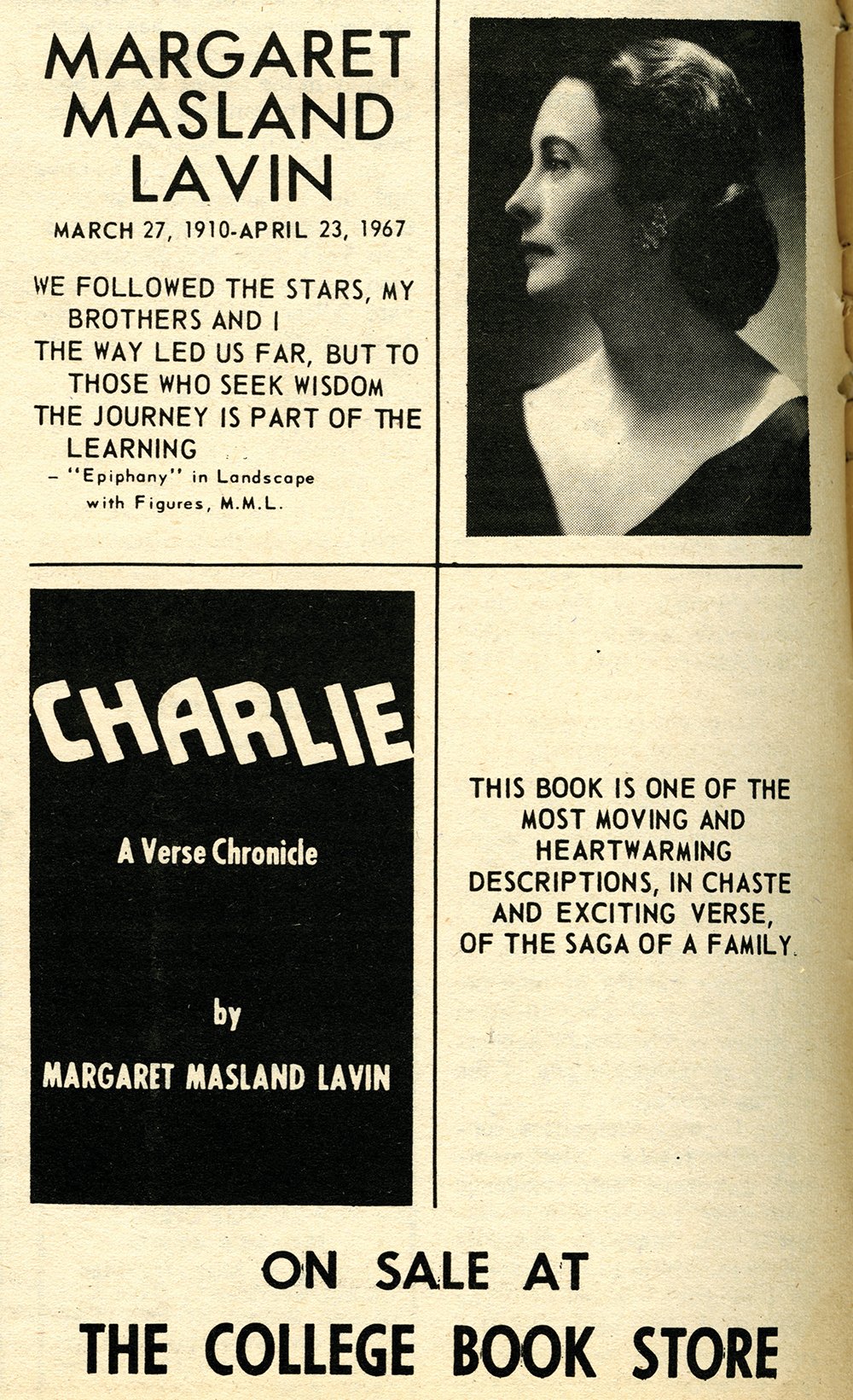
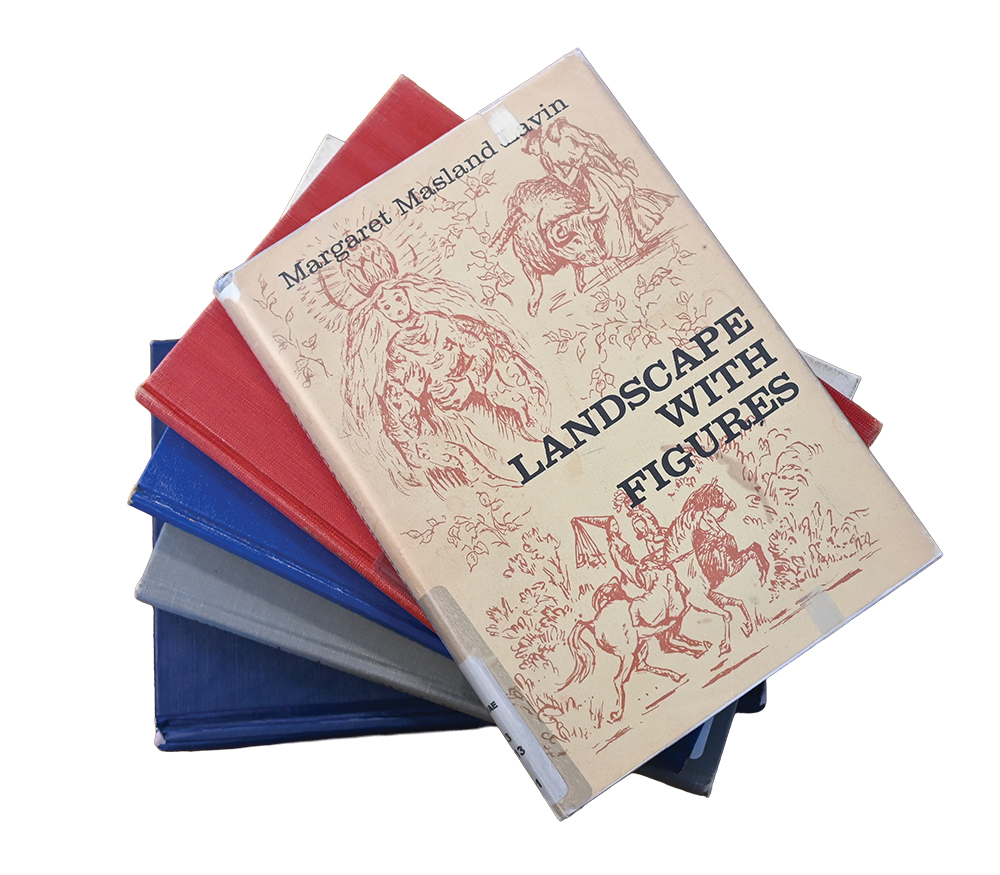
Lavin was a prolific writer and poet who published four collections of poetry: “To Kate” (1959), “Landscape with Figures” (1961), “Charlie” (1967), and “My Enemy, My Lord,” which was published posthumously in 1972. Her first published book was written in memory of her daughter, Kate Lavin, who died in car accident at age 17. This collection received critical acclaim, and eight poems were republished in a special section of “Seventeen” Magazine.
In addition to her poetry books, Margaret’s work also appeared in “Expedition Magazine,” The Antioch Review, and the Beloit Poetry Journal. She earned multiple awards, including honors from the Pennsylvania Poetry Society in 1961 and election to Phi Beta Kappa as an alumna member in 1963.
In addition to her writing career, Margaret was active in many organizations related to poetry, the arts, and her community. She was a member of the Poetry Society of America, the Pennsylvania Poetry Society, the Philadelphia Orchestra Association, the Philadelphia Art Alliance, the Philadelphia Museum of Art, the Pennsylvania Academy of Fine Arts, and Wyncote Presbyterian Church. She was also involved in many charitable organizations, including serving on the Women’s Committee of the Children’s Hospital in Philadelphia.
Lavin remained a devoted Wilson alumna throughout her life and was well-loved and fondly remembered by her classmates. Her husband also served on Wilson’s Board of Trustees from 1958 to 1968. The following tribute, written by her classmate Shirley Allen Reid, Class of 1931, appeared in the Autumn 1967 issue of the Alumnae Quarterly after Margaret’s death:
“Those who knew Margaret Masland Lavin in her written word and painting, know the richness and depth of the ‘examined’ life. She searched for Truth: she arrived at love, beauty, integrity, much wisdom, compassion, restraint; and she defined awareness and obligation in active participation in the charitable, civic, and cultural organizations of a worldwide community of interest.”
Special thanks to Vivian Huddleston, Hankey Center graduate public history fellow, for her research assistance, and Maxine Wagenhoffer, Ph.D., director of the Hankey Center for the History of Women’s Education and assistant professor of history, for her support on this article.
