
Across campus, Wilson College continues to invest in the spaces that shape student experiences. Over the summer, a variety of projects reached completion, including a new artificial turf athletic field, upgrades at the Penn Hall Equestrian Center, expanded residential housing, renovations to the student center and the Esports Arena, and the installation of a new three-dimensional outdoor sculpture. While each project serves a different purpose, together they reflect the College’s ongoing commitment to innovation, student success, and the continued evolution of the campus community.
A New Wilson Landmark
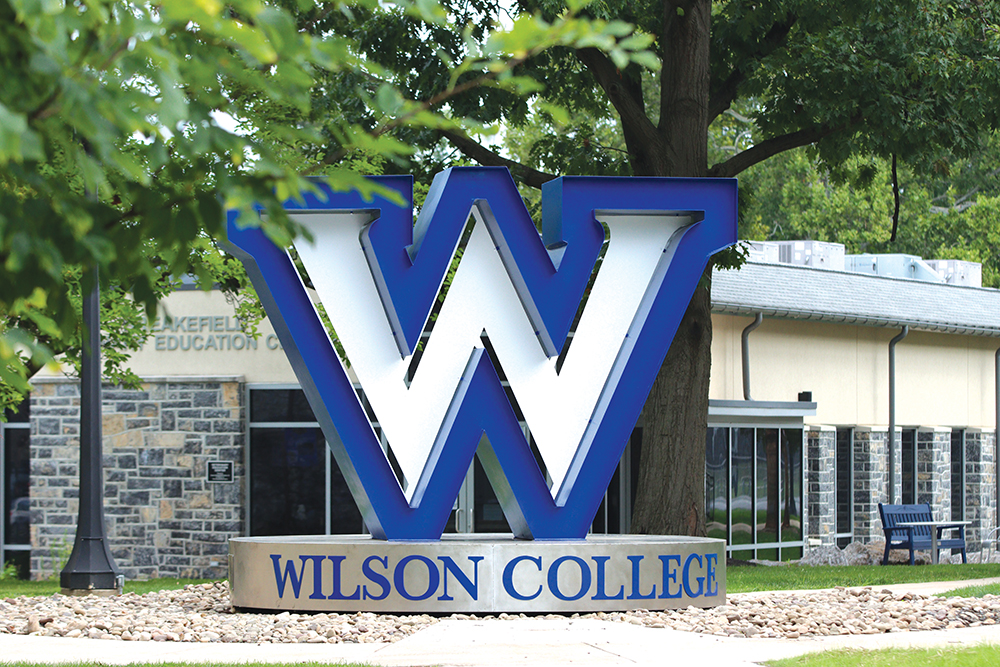
A new campus landmark now offers students, alumni, and visitors a memorable way to celebrate their connection to Wilson College. Located in the area between Lortz Hall and the Harry R. Brooks Complex for Science, Mathematics, and Technology, the new Wilson “W” sculpture serves as a focal point for Mistick Quad and a natural gathering place for photos and special occasions. The project was completed with the addition of lighting and a river rock bed surrounding the installation.
Made possible through a generous gift from Charlene Cronenberg Berardino ’63 and her husband, Thomas, the prominent “W” creates an inviting backdrop for students, faculty, staff, and alumni to capture their love for Wilson. Whether featured in photographs taken during Move-In Day, Commencement, Reunion Weekend, or everyday moments with friends, the sculpture is quickly becoming a favorite campus destination and a visible symbol of Wilson pride.
Refreshed Student Spaces
Students also returned this fall to refreshed spaces designed to support campus involvement, collaboration, and recreation.
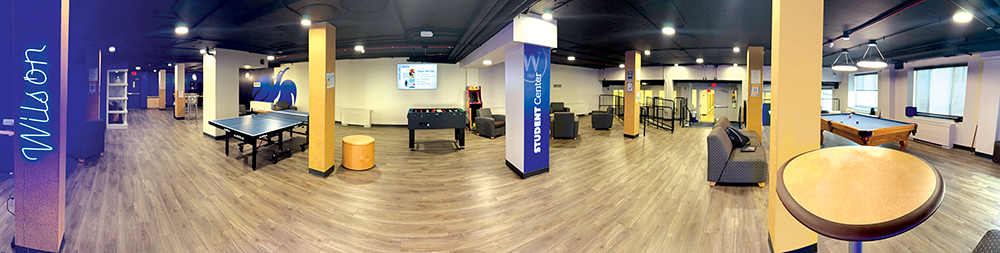
“Over the last two years, WCGA (Wilson College Government Association) officers have noticed a significant increase in the number of students using the Student Center and recognized that it was time to give this important space a refresh. Their goal was to create a space that truly feels like Wilson. They shared their vision with the Office of Marketing and Communications and worked to create a welcoming and comfortable place where students want to spend time and that they can feel proud to call their own. The officers took the responsibility seriously and considered many options for design, functionality, and the overall feel of the space. Throughout the process, they focused on creating an environment that reflects Wilson’s identity and commitment to a positive
student experience,” said Katie Kough, dean of students.
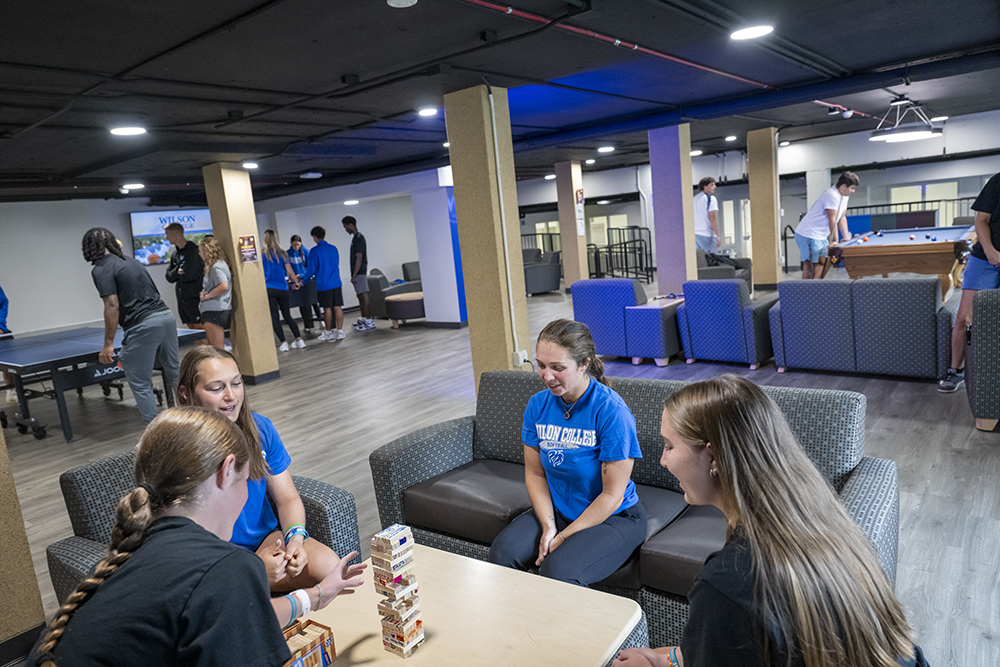
The Student Center in Lower Lenfest received new flooring, fresh paint, and improved lighting, creating a more welcoming environment for students to gather, study, and connect. As part of the renovation, WCGA relocated from its former location in Lower Lenfest to a newly renovated office within the Student Center, providing student leaders with a more visible and accessible presence at the heart of campus life.
A separate project in Lower Lenfest created a new home for Wilson’s growing esports program. The Esports Arena was relocated from the ground floor of Prentis Hall to the former WCGA space in Lower Lenfest under McElwain Hall. The Arena gives the program a dedicated space to continue building community and supporting student competitors. The new space can now be prominently featured on campus tours and includes new branding, carpeting, painting, and lighting.
Apartment-Style Housing
This fall, students and staff members began moving into newly renovated apartment-style housing designed to support the College’s growing enrollment and enhance the residential student experience.
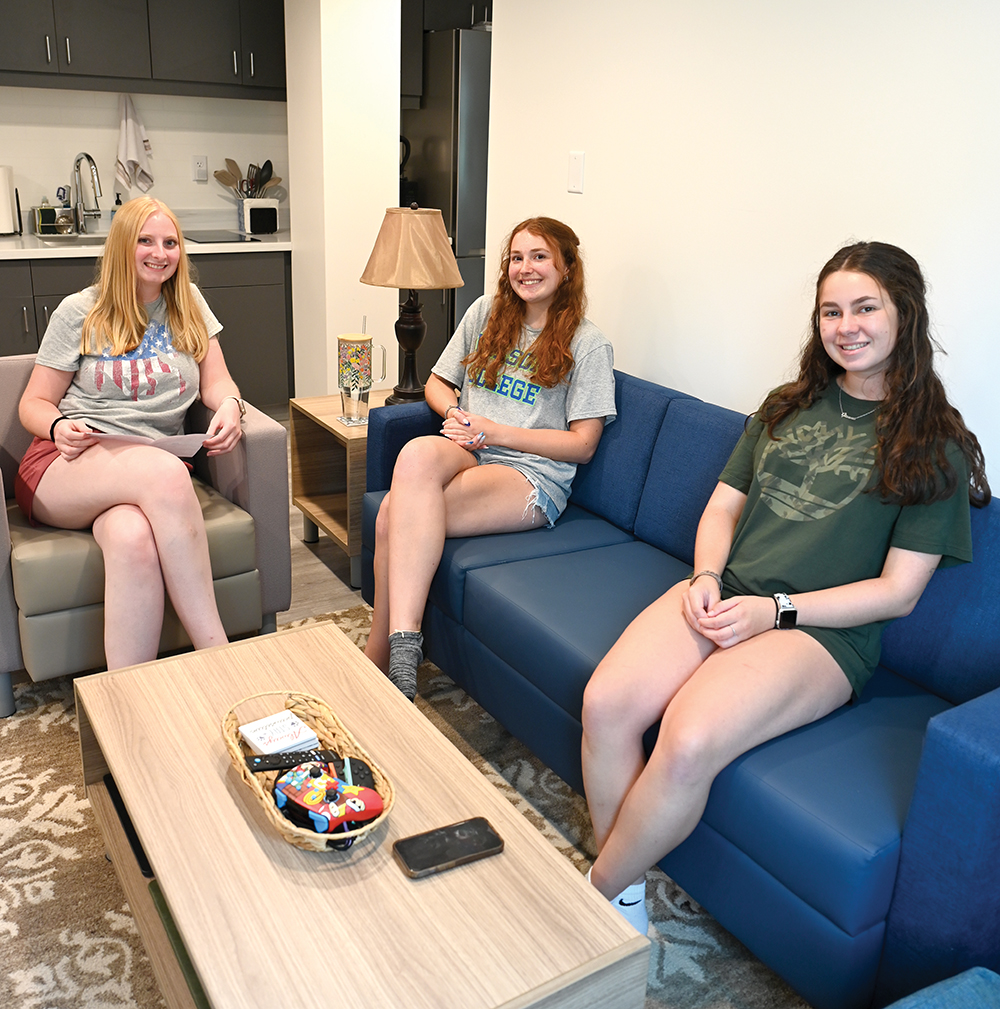
The project, launched in January 2026, represents a significant investment in campus infrastructure and student success. In response to several years of sustained enrollment growth that brought on-campus housing near full capacity, the College reimagined the ground floor of Prentis Hall and the area above Jensen Dining Hall, known to many alumni as the Platform and accessible through the second-floor lounge between McElwain Hall and Davison Hall, to create new residential opportunities.
The completed renovation adds 16 residential beds for students on the ground floor of Prentis Hall through three four-bedroom apartments and one ADA-accessible apartment accommodating four students. In the space above the dining hall, two one-bedroom apartments were constructed, one for a visiting Fulbright scholar and the other for the graduate assistant supporting residence life, along with a two-bedroom apartment for the assistant director of residence life. The renovation of this area also includes five student development offices and a student lounge.
The new apartments offer students a more independent living environment while keeping them connected to campus life. Featuring private or semi-private bedrooms, shared living areas, and kitchens, the apartments are designed to foster community, responsibility and personal growth.
“Apartment-style housing has become an increasingly important factor in student recruitment and retention, particularly for upper-level students seeking greater independence,” said William Sommers, vice president for enrollment management. “The residential model helps students develop valuable life skills, including collaboration, time management, and accountability, while remaining engaged in the campus community.”
The opening of the Prentis Hall apartments this fall also marked the launch of Wilson’s new Phoenix Forward: A Leadership Living-Learning Community, a high-impact leadership development initiative designed to provide students with meaningful, hands-on opportunities to lead and make a difference on campus. Residents were selected through a competitive process based on proposals for leadership initiatives that will benefit the campus community. Living together in the new Prentis apartments, students will develop and implement their ideas while building leadership skills in a collaborative residential setting. The program aligns with the College’s strategic plan and represents an exciting opportunity for students to put leadership into action. Look for more details about this exciting new initiative in future issues of Wilson Magazine.
Artificial Turf Field Opens at Kris’s Meadow
Construction on a more than 100,000-square-foot artificial turf field began in late May and was completed in time for the start of the fall semester. The project transformed the Rhonda Brake Shreiner Soccer Field at Kris’s Meadow into a high-performance playing surface that now serves Wilson’s women’s and men’s soccer, field hockey, and women’s lacrosse programs.
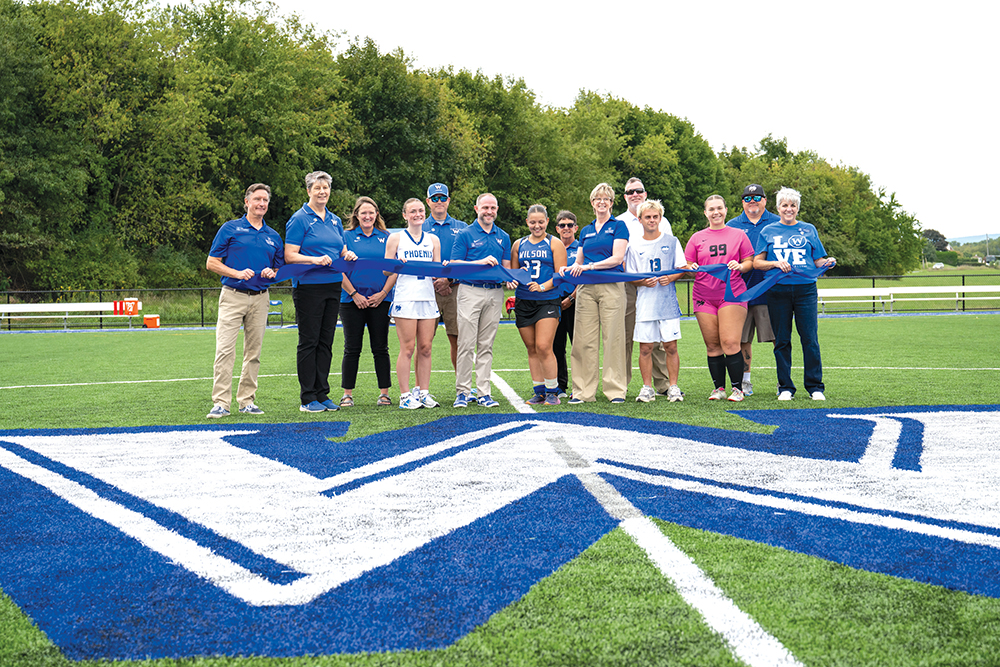
The new field offers significant benefits for both competition and practice. Unlike natural grass surfaces, artificial turf can withstand heavy use and allow teams to maintain their schedules even after periods of inclement weather. The durable surface also provides a consistent playing environment throughout the year, reducing disruptions caused by field conditions.
For Wilson’s Director of Athletics Andrea Hoover-Erbig, the new field represents an investment in student-athletes. “This project is about more than a new playing surface. It reflects Wilson’s commitment to providing student-athletes with the facilities, resources, and opportunities they need to succeed both on and off the field.”
College leaders, trustees, coaches and student-athletes gathered on Saturday, September 19, to celebrate the field’s opening, recognizing a project that had been in development for more than two years. The dedication marked a significant milestone for Wilson athletics and the College.
A ceremonial ribbon cutting was held Sept. 19 to celebrate the successful completion of the artificial turf field project. Left to right: William Sommers, vice president for enrollment management; Tina Hill, former director of athletics; Andrea Hoover-Erbig, director of athletics; Finley Vandevander ’28, lacrosse; Paul Flohr, lacrosse coach; Wes Fugate, president; Hannah Bost ’27, WCGA president and field hockey; Shelly Novak ’92, ’19, field hockey coach; Jennifer Nickle Banzhof ’94, chair of the Board of Trustees; Bret Altimore, men’s soccer coach; Eric Arbogast ’27, men’s soccer; Madison Ebersole ’28, women’s soccer; Terry Harris, women’s soccer coach; and Katherine Buck, vice president for student development.
Footing, Fans, and Lighting
Safety, comfort and performance were the driving forces behind a series of improvements at the Penn Hall Equestrian Center, where upgrades to the indoor arenas will benefit both student riders and the horses that support Wilson’s nationally recognized equestrian programs.
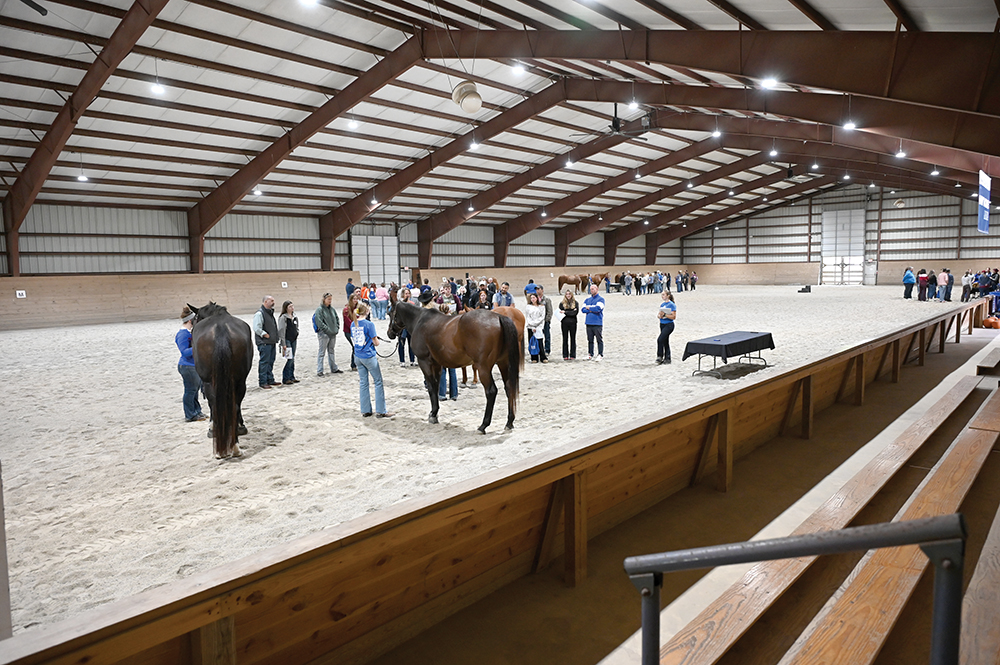
“This past summer was an exciting time for the Equine Studies department,” said Janice Holland, director and associate professor of equine studies. “Through a generous donor we were able to upgrade both the Hawthorne and Cook indoor arenas. Both arenas now have LED lighting, large fans to improve air circulation, and new footing. In both arenas we removed the old footing down to the base, made some needed repairs to the base, and installed sand footing. Using a sand footing, versus a synthetic blend, allows the arenas to be fully functional for our riding classes and the hunt set and western equestrian teams.”
The new footing helps keep equestrian athletes safe by reducing the risk of injury for both riders and horses. Quality footing can minimize the frequency of common equestrian injuries, such as concussions and traumatic brain injuries. It also supports horses’ joints, tendons, ligaments, and muscles, while footing that is too deep, shallow, soft, or hard can lead to serious physical damage.
New fans improve air circulation and help horses maintain a regular work schedule during hot summer months, which helps keep them fit and better prepared for the additional workload required after students return for the semester.
With limited natural light in the indoor arenas, new LED lighting enhances the training experience and creates a safer environment. Improved visibility helps riders navigate the arenas and avoid obstacles, while also allowing horses to navigate the spaces with greater confidence.
“We are thankful that everything was installed and fully functional before classes were in session. Both students and staff are giving rave reviews to the upgrades,” said Holland.
