by Cheryl Bauman Bock ’79
In fall 2025, I joined 18 fellow travelers for The Balkans and Beyond, a Wilson College tour that felt as much like a reunion as an adventure. Our group represented Wilson classes from the late 1950s through the 1970s, plus their family members, along with President Wes Fugate and Cody Ward. Ward, an international education professional who has visited nearly 60 countries, helped design the itinerary centered on his favorite country, Croatia.
First Impressions
My sister, Donna Bauman Hensinger, was my travel companion. After meeting in Frankfurt, we arrived in Ljubljana, Slovenia, and began exploring the city around our hotel, the Grand Hotel Union Eurostars. We wandered to Prešeren Square, browsed the outdoor farmers’ market preparing for All Souls’ Day, and admired the charming Old Town along the river. The city’s architecture blended Art Nouveau, Gothic, and Baroque elements, most notably the Triple Bridge and buildings designed by Jože Plečnik. Outdoor cafés, artisan shops, and local specialties like handmade lace, Rogaška crystal, and the traditional Slovenian walnut and honey rolled pastry called potica, helped create some of our first impressions of the area.
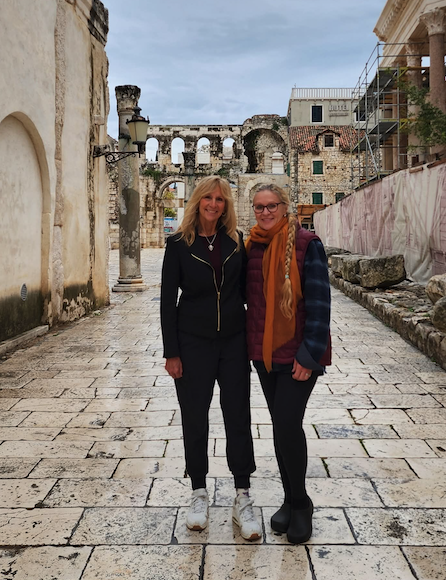 Cheryl Bauman Bock ’79 traveled through the Balkans with her sister, Donna Bauman Hensinger.
The next day, we toured the Franciscan Church of the Annunciation and St. Nicholas Cathedral, both with their breathtaking Baroque-style paintings, altars, and domes. That evening, once everyone had arrived, we enjoyed
traditional Slovenian cuisine with our guide Ian. I tried the delicious house specialty sampler of deer medallions with cherry sauce, stag steak with porcini mushroom sauce, and wild boar with green pepper sauce, plus homemade cheese rolls and potato and bread dumplings. We quickly realized that meals would become anchors of each day, revealing the character of each place we visited.
A morning walking tour took us past Park Zvezda, the Dragon and Butcher’s bridges, and up to Ljubljana Castle via funicular. From the castle viewing tower, we enjoyed panoramic vistas of the city and the Kamnik-Savinja and Julian Alps.

History at the Borderlines
One of the defining pleasures of the trip was the sense that history could be touched, climbed, or walked through. On Wednesday, a day trip to Bled, Slovenia, brought us to its glacial green lake and Bled Castle, the country’s oldest castle, perched on a 130-meter cliff with mesmerizing views of Lake Bled and the Julian Alps. Inside, my sister and I were drawn to the printing press and purchased custom souvenir prints before exploring the courtyard, buildings, and exhibits, and indulging in the famous Bled cream cake with its delicate layers of puff pastry, decadent egg cream custard, and whipped cream.
A border crossing on Thursday took us to Trieste, Italy, a city shaped by Slavic, Italian, and Austro-Hungarian influences. Despite some rain and chilly weather, we enjoyed views of the Adriatic Sea, glimpsed Roman and Baroque landmarks, sampled original Sacher-Torte, and warmed up with pumpkin soup by a fire before continuing to Opatija, Croatia.
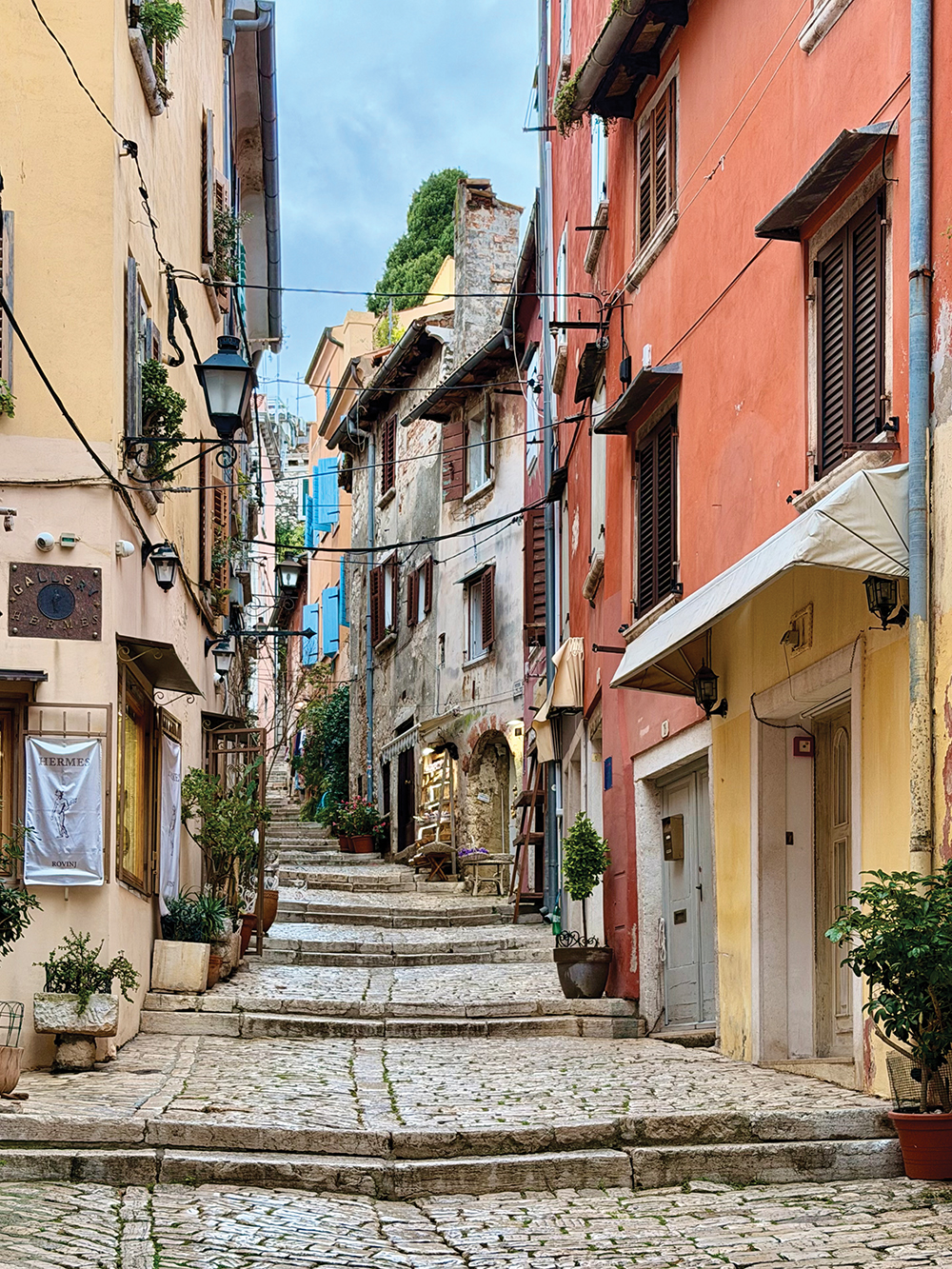
Our tour of the Istrian Peninsula included the historic towns of Pore and Rovinj. In Pore , the sixth century Euphrasian Basilica and its shimmering Byzantine mosaics impressed us, while Rovinj charmed with its coastal scenery and winding cobblestone streets. After a gelato break, my sister and I climbed the winding, hilly cobblestone streets leading to the Church of St. Euphemia, built in the 1700s. Getting lost in the labyrinth of streets on the way down turned into an unexpected treat as we sampled truffles, wine, and olive oil along the way. Rejoining our group, we ended the day in Pula, where a magical sunset illuminated the ancient Roman amphitheater.
Unexpected Joys
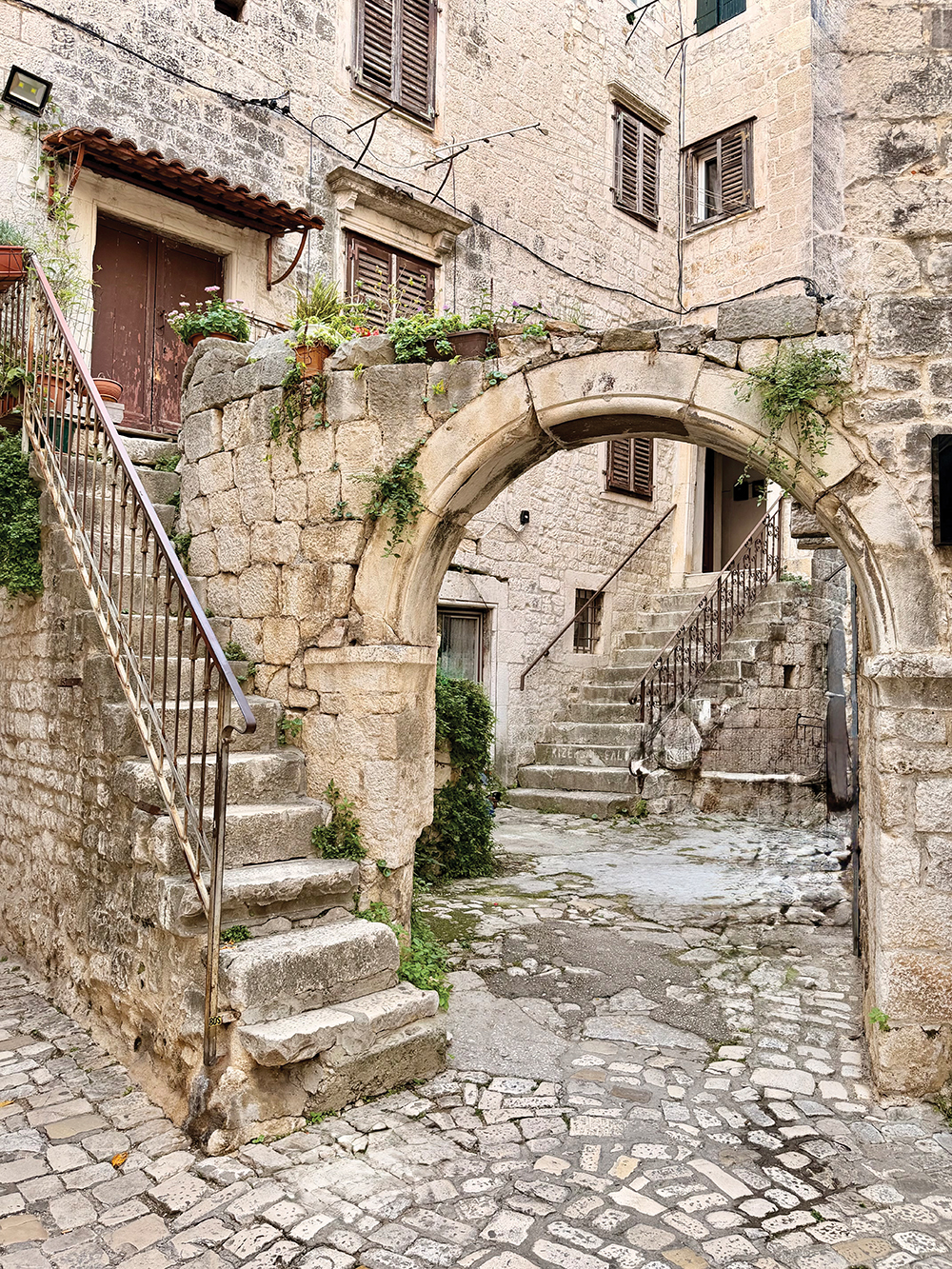
Some of the most memorable parts of the journey came from surprises—the moments that weren’t planned but quickly became highlights. When Plitvice Lakes National Park reached capacity early on Saturday, we had to skip our visit, but the unexpected break gave us time to relax at our next hotel in Split, Croatia. The next morning, we visited Krka National Park, walking along rushing streams and past seven green-tinted waterfalls. Later, our skilled bus driver, Dragan, took us to Trogir, a beautifully preserved medieval town on a small island filled with Gothic, Renaissance, and Romanesque architecture, including Kamerlengo Castle, the Church of St. Sebastian with the clock tower, and Trogir Cathedral.
Pouring rain surprised us the following morning, but despite leaking raincoats and wet shoes, an excellent local guide gave us a tour of the Palace of Diocletian, built for the emperor’s retirement in A.D. 295-305. After the skies cleared, my sister and I retraced the route for photos and ended the day with an amazing meal of bread, prosciutto, cheese, anchovies, fish pâté, and wine.

Along the Adriatic
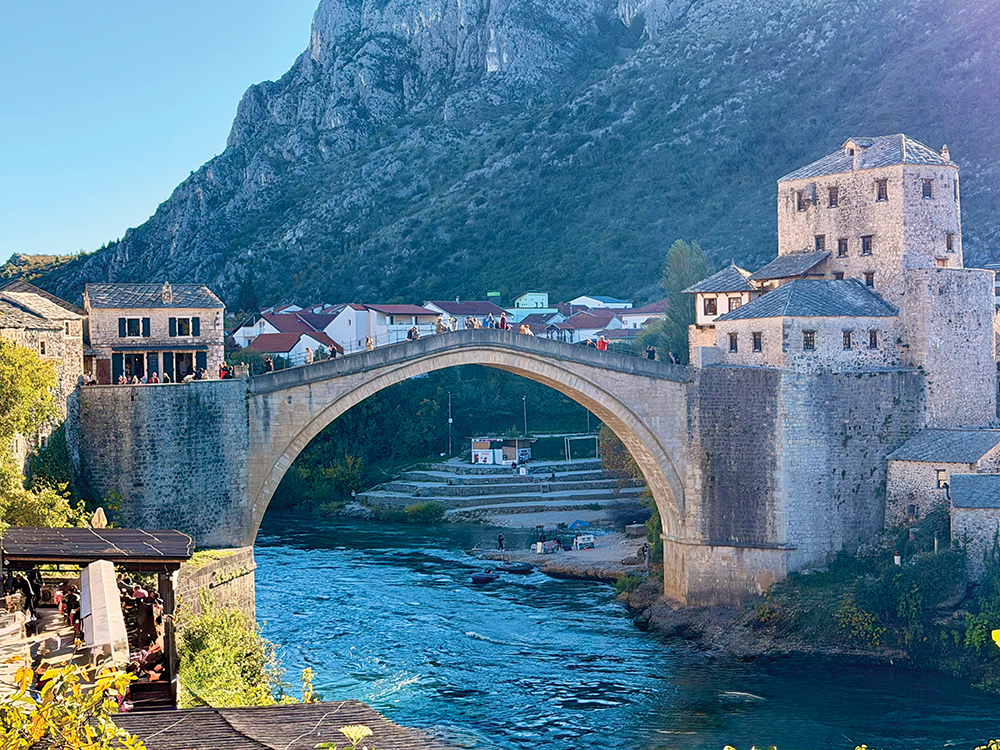
On Tuesday, Nov. 4, we drove along the Dalmatian coast to Dubrovnik, Croatia, detouring into Bosnia-Herzegovina to visit the intriguing city of Mostar with its slippery cobblestone streets, Ottoman-era architecture, markets, mosques, and the graceful arched bridge of Stari Most that soars 20 meters above the Neretva River. That evening, we arrived at our hotel in Dubrovnik for a fantastic group dinner.
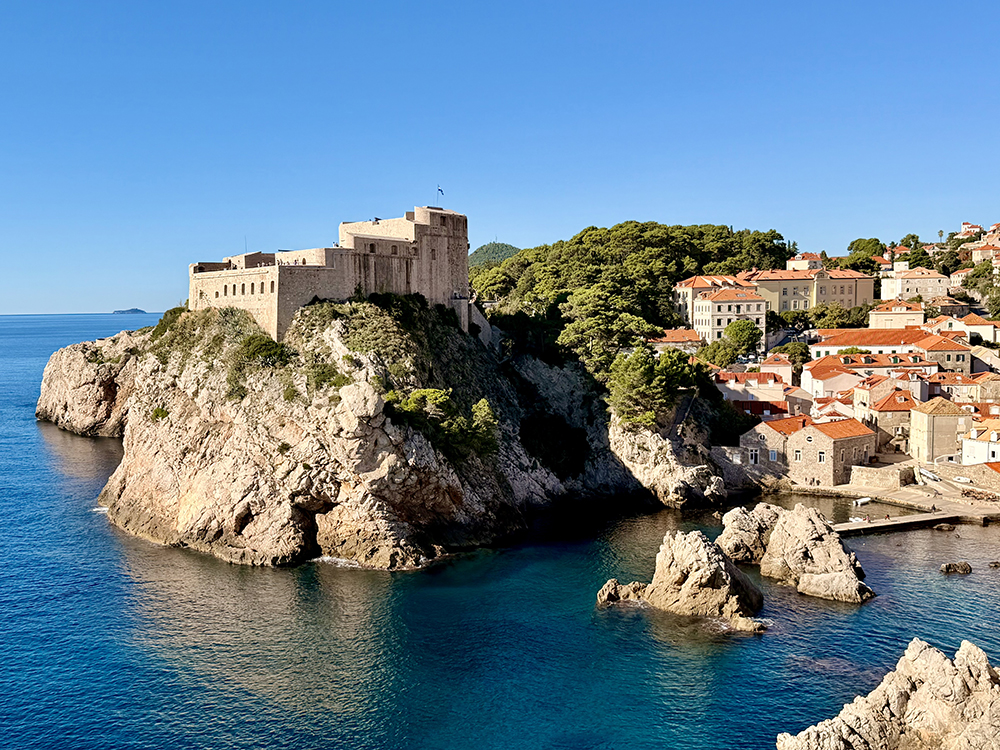
The next day, a walking tour highlighted Dubrovnik’s medieval walls and fortress. Some in our group climbed the ramparts, while others shopped. In the afternoon, many enjoyed a harbor boat ride, while my sister and I relaxed at a bar perched on rocky outcroppings outside the walls, soaking in the sun and technobeat music, while watching kayakers gliding across sapphire water. We even found a few “Game of Thrones” filming sites before returning to discover an early birthday cake from the hotel, which I happily shared with fellow travelers.
On Thursday, Dragan drove us to the charming town of Perast, Montenegro, where we enjoyed a short boat ride to an island church surrounded by stunning views of the Adriatic and the Gulf of Kotor. We continued to the walled city of Kotor—reportedly home to more cats than people—where we sampled local food and shopped before heading to Podgorica. That evening’s farewell dinner came with another birthday surprise: a cake and a group card secretly organized by my sister.
While many travelers headed to Austria the next day, my sister and I chose to explore Podgorica. We strolled along the riverfront, walked to Millennium Bridge, explored nearby Roman ruins, wandered through Old Town, and admired the Orthodox Temple of Christ’s Resurrection. That evening, we enjoyed our final meal of grilled vegetables, rice, sausages, chicken, and pita bread. The next morning, Nov. 8, we flew to Vienna to begin our journey home.
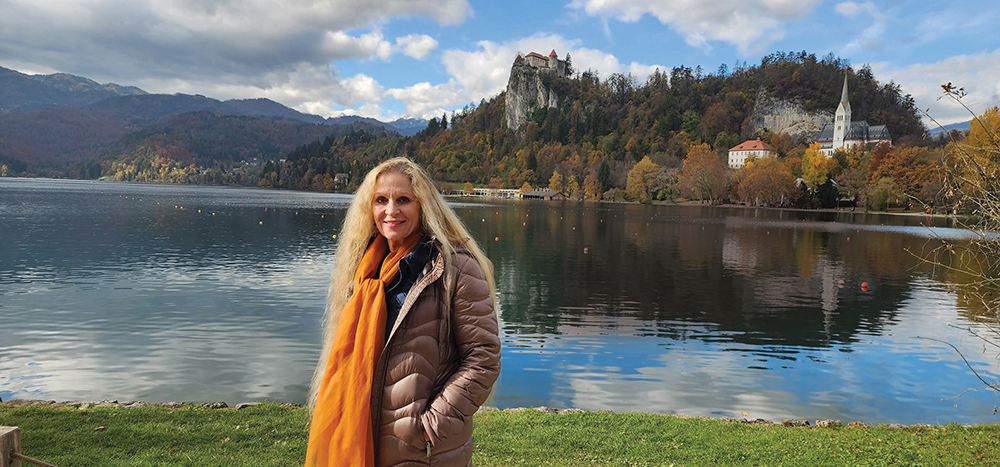
Cheryl Bauman Bock’79 currently serves as a director on the AAWC Board. She is chair of the Heritage Committee and a member of the Connections Committee and its Tours and Travel Subcommittee
Our trip was rich in history, adventures, and remarkable meals that reflected the character of each place we visited. Every town—whether Slovenian, Italian, Croatian, Bosnian, or Montenegrin—offered its own personality, shaped by the layered influences of the empires that once ruled there. The Balkans gave us much to admire, but sharing these discoveries with fellow Wilson alumnae made the experience truly unforgettable. We left with deeper friendships and an eagerness for future adventures together.