
By Sherri Buerdsell, Ph.D., Assistant Professor of Biology
One core component of Wilson College’s Marine Biology course is a three-day field trip to the Chincoteague Bay Field Station in Wallops Island, Virginia. This year, the experience marked a first as alumna Katie Riley ’24, who majored in environmental science, led the class as field educator. She is now the assistant program coordinator at the Chincoteague Bay Field Station.
“The experience made classroom concepts feel more real, especially while learning about coastal ecosystems and wildlife in such a unique environment.” — Emily Breighner ’27
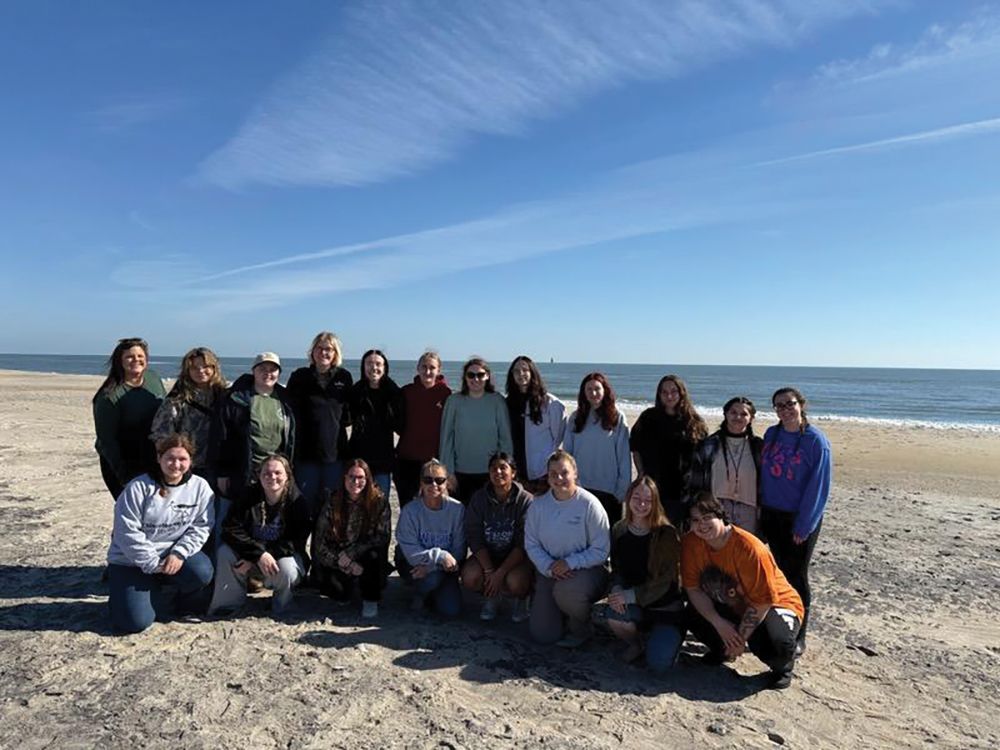
Back (l to r): Stephanie Summers, adjunct instructor of biology, Olivia Dingzon ’27, Morgan Browning ’26,
Emily Johnson ’26, Emily Breighner ’27, Kalea Pechart ’26, Sarah Bushey ’26, Raven Williams ’28, Amanda Blount ’26, Madison Kellogg ’27, Katelyn Dehaven ’26, and Sophia Sensabaugh ’27.
Front (l to r): Hayden Sturgeon ’26, Kaelyn Goff ’27, Caitlin Oliviero ’27, Sherri Buerdsell, Ph.D., assistant
professor of biology, Jade Syto ’27, Katie Riley ’24, assistant program coordinator at the Chincoteague Bay
Field Station, Katy Hedderick ’27, and Kris Robinson ’26.
“My time at the Chincoteague Bay Field Station has been an invaluable opportunity to study marine ecosystems and the organisms in them, as well as to communicate and teach this information to visiting students,” said Riley. “This experience has allowed me to apply the knowledge and skills I developed during my college coursework, drawing directly from the classes and instruction I received from my professors at Wilson. Through hands-on fieldwork in a variety of settings, I have been well prepared for the responsibilities of my current position.”
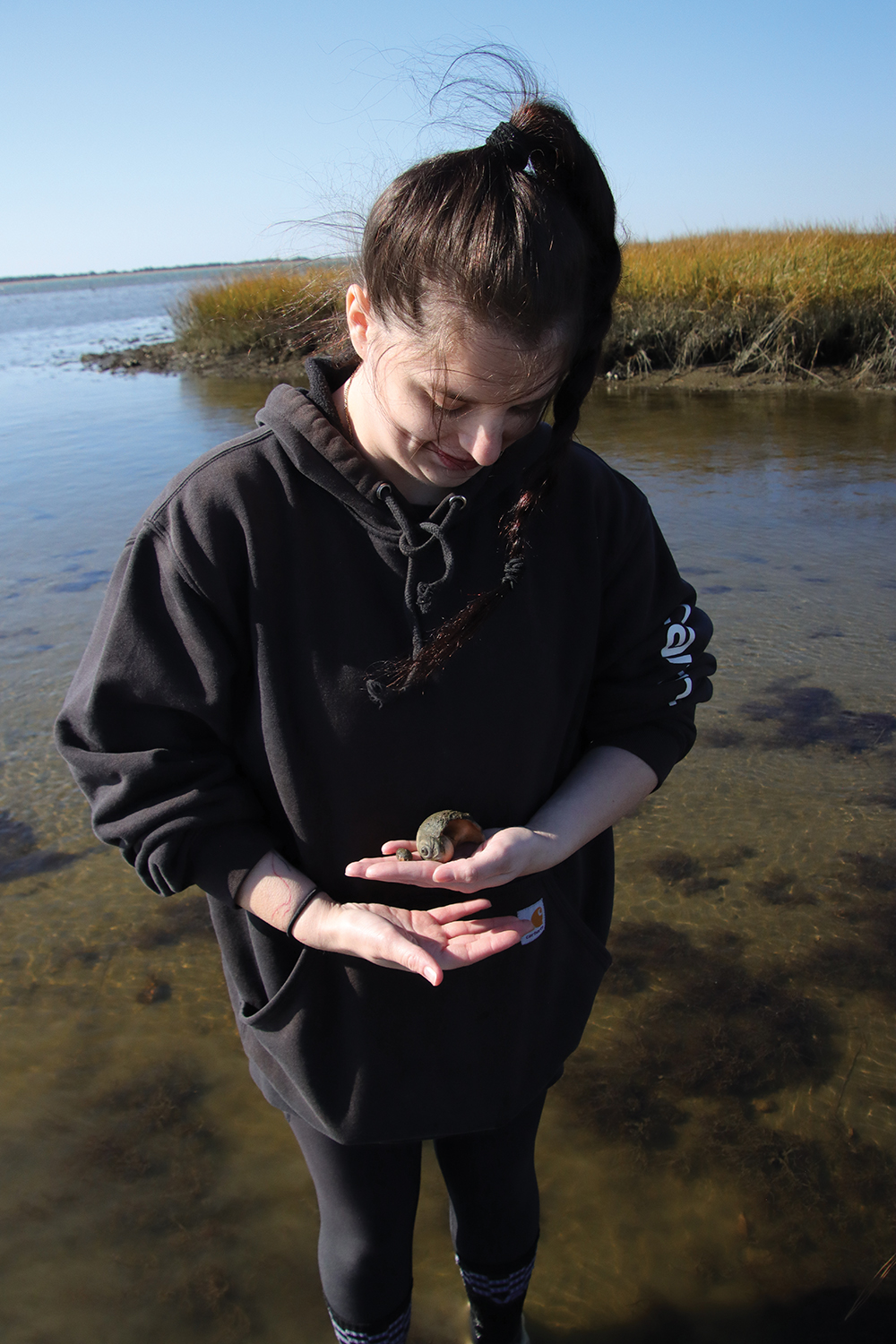
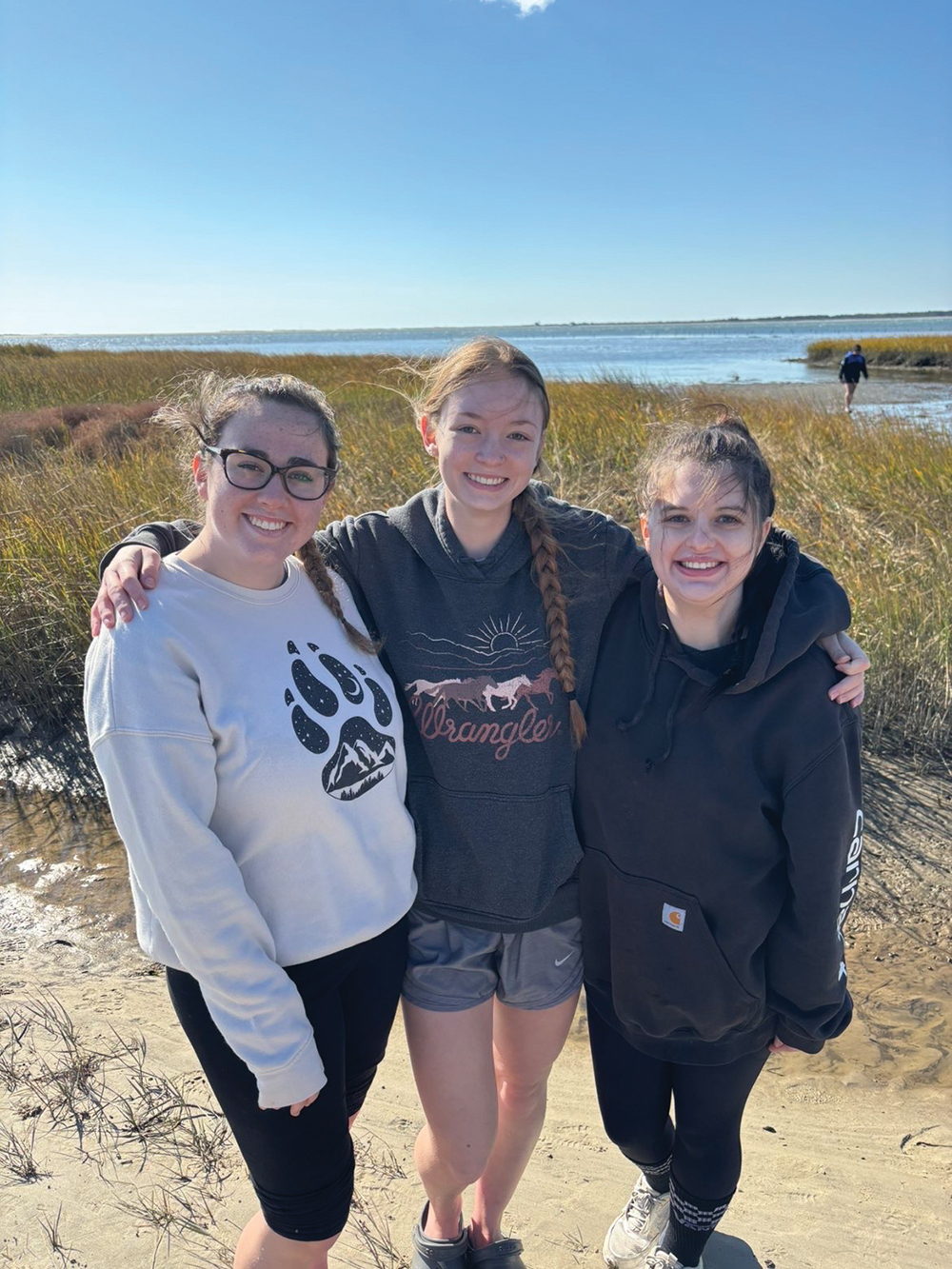
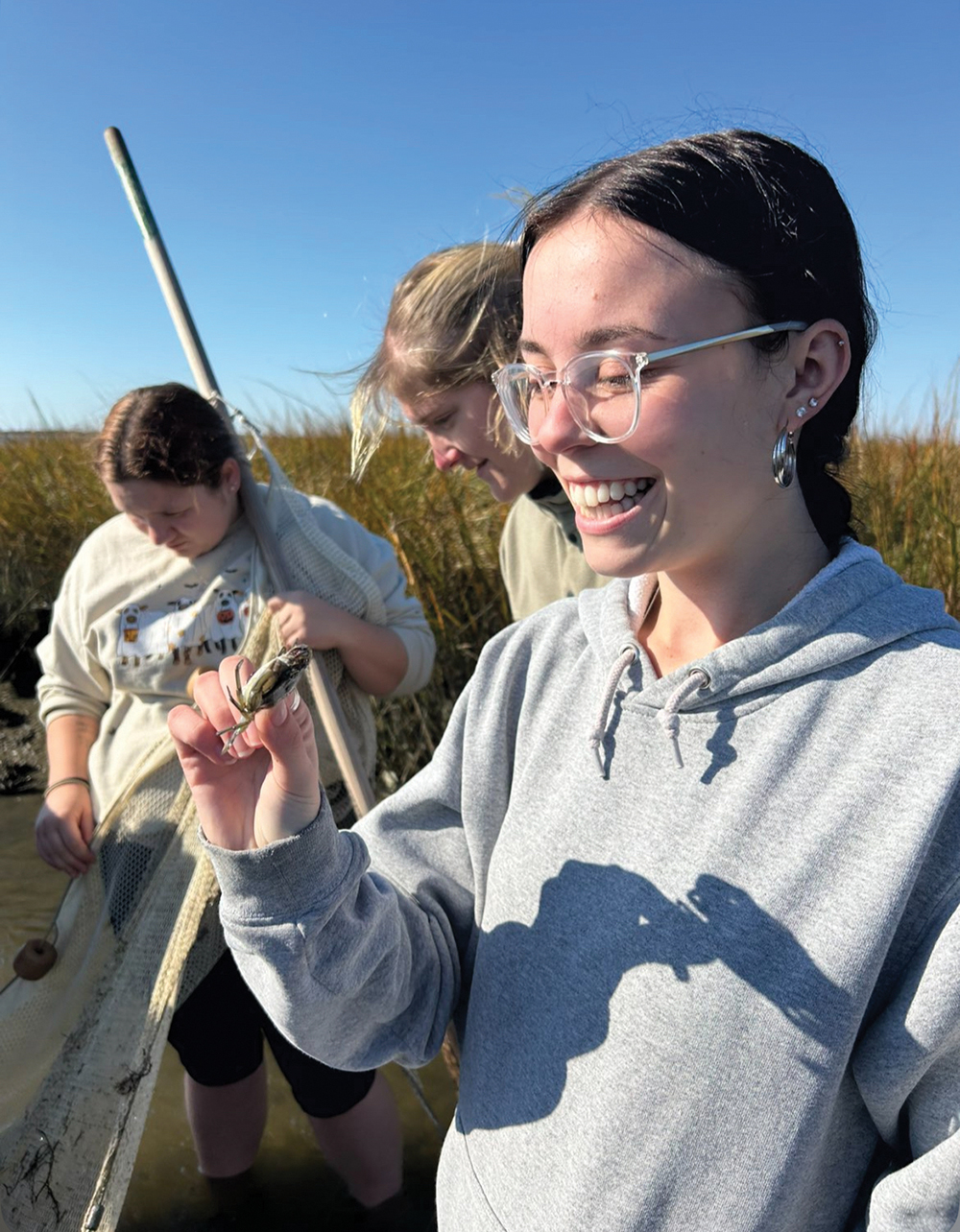
Katelyn Dehaven ’26 enjoyed comparing hermit crabs, one big and one adorably small.
In the middle of the Fall 2025 semester, while other Wilson students were attending Halloween parties back on
campus, 16 students in this year’s Marine Biology class participated in the required field experience Oct. 31–Nov. 2, 2025. Adjunct Instructor Stephanie Summers served as an additional source of marine biology expertise and as a driver.
“It was a such a cool experience to learn about all the life on the different parts of the intertidal zones.” — Sophia Sensabaugh ’27
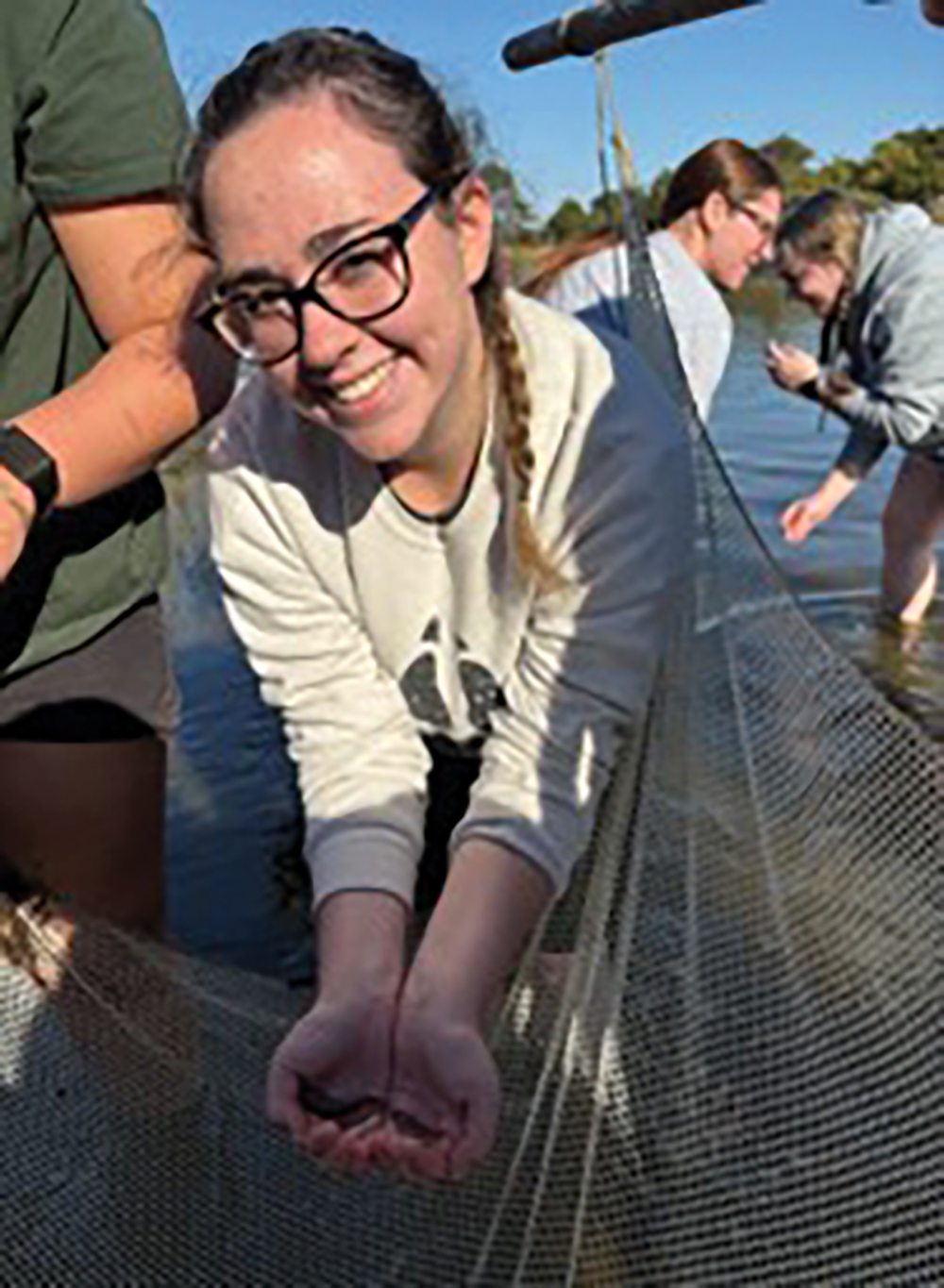
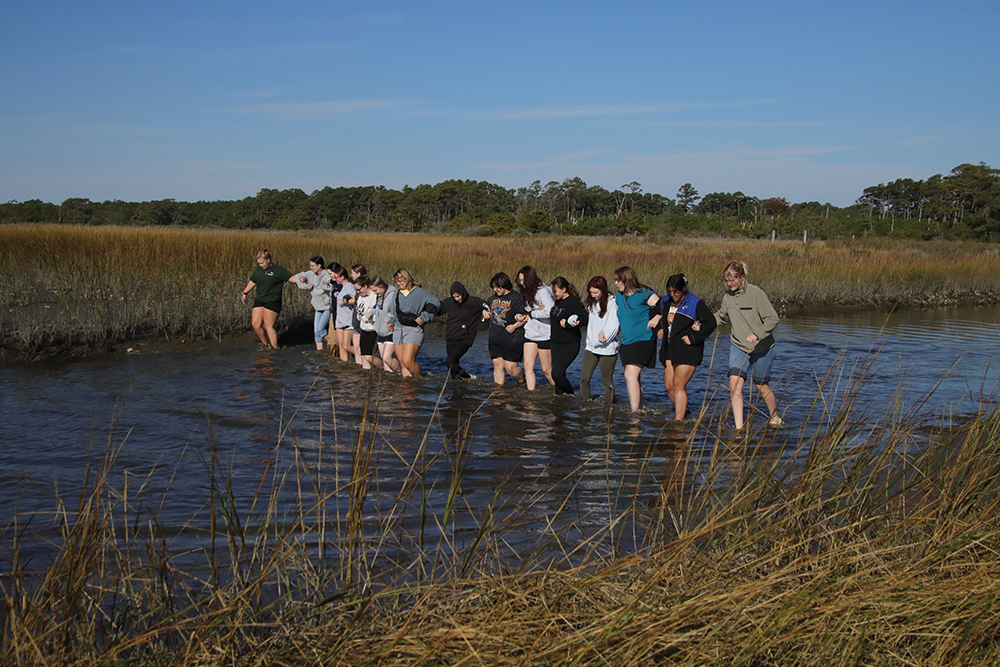 During the intertidal studies, the students walked in a line to herd fish and invertebratesinto a seine net to sample biodiversity.
During the trip, students explored the ecology of Chincoteague Bay, focusing on the intertidal zone and barrier island ecosystems. The class studied animals and plants that live in the area between high and low tides, using multiple techniques to collect organisms for identification.
On the Ocean Research Cruise, students experienced trawling and caught a variety of marine organisms, including a terrapin and seahorses. On Assateague Island beach, students built different types of dunes to understand how barrier islands protect the mainland from storms. Despite the fall temperatures, several students even swam in the ocean.
Marine Biology is offered in the fall of odd numbered years and is open to all students who have taken General Biology I and II.
“Seeing the Chincoteague Bay Field Station made me want to work at a place like it.” — Katy Hedderick ’27
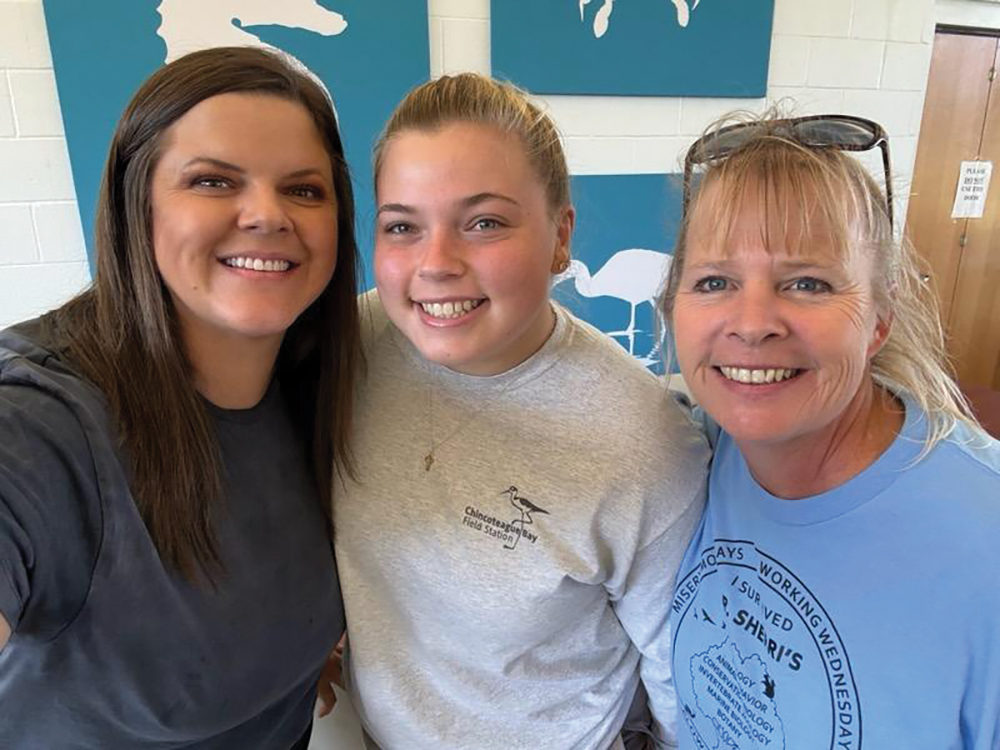
Left to right: Stephanie Summers, adjunct instructor of biology, Katie Riley ’24, assistant program coordinator at the Chincoteague Bay Field Station, and Sherri Buerdsell, Ph.D., assistant professor of biology.
