
by Else Drooff Valenzuela, Enrollment Consultant with Rize
Since 2020, Wilson College has partnered with Rize Education to strategically add degree programs in Computer Science, Cybersecurity, and Supply Chain Management, and concentrations in Integrative Neuroscience, Graphic Design, and Web Design. This marks a new growth model—one that leverages a nationwide consortium of independent colleges to share specialized curricula and faculty expertise.
“What intrigued me was the opportunity to enhance what we’re doing in ways we wouldn’t be able to do on our own,” said Michael Cornelius, Ph.D., dean of The School of Arts and Sciences, while reflecting on Wilson’s partnership with Rize Education. Initially skeptical, Cornelius now oversees four Rize-powered programs and calls them “the perfect complement to what we’re doing at Wilson.”
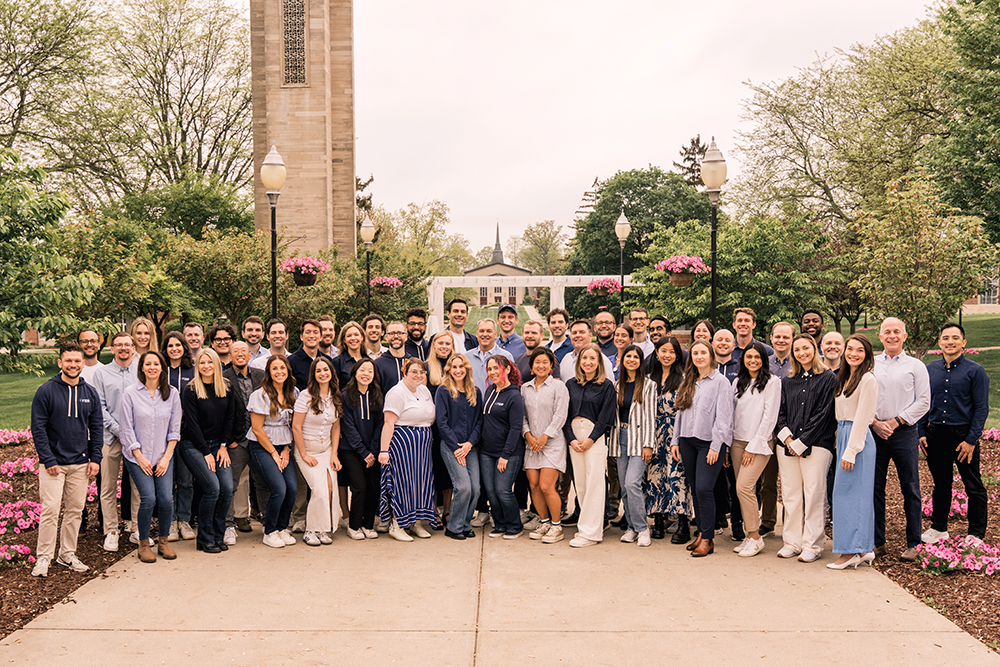 The Rize Team
About Rize Education
Rize was founded in 2019 after cofounders Kevin Harrington and Connor McCarthy spent two years living on the campus of Adrian College in Michigan, working alongside President Jeffrey Docking to understand what small colleges need to thrive without compromising identity. The result was a collaborative model that preserved Adrian’s distinctive culture while adding 27 programs that attracted new students. The model has since resonated with more than 135 small colleges nationwide, institutions looking to meet student demand for career-focused programs while maintaining the personalized, value-centered education that defines colleges like Wilson. Rather than replacing what small colleges do well, the consortium model adds capacity in fields where institutions often struggle to hire and retain specialized faculty.
The Consortium Model
Wilson is a member of the Lower Cost Model Consortium (LCMC), a collective of higher education institutions with the common goal of providing top-quality, lower-cost education. By partnering with Rize and joining the LCMC, Wilson gains access to expertise in rapidly evolving fields where specialized hiring can be particularly challenging for small colleges.
Rize develops rigorous, career-aligned courses with consortium member institutions and industry experts. Through a hybrid structure, students take specialized courses online through the consortium, taught by faculty from other colleges, while most of their coursework remains in-person with Wilson professors. A Cybersecurity major, for example, completes technical core courses through Rize while still taking business, liberal arts, and elective courses with Wilson faculty.
“What appealed to me most was the opportunity for students to learn from a range of instructors across the Consortium,” says Philip Lindsey, M.A., M.F.A., professor of fine arts, who oversees the Web Design program.
Joshua Legg, M.F.A., dean of The School of Professional and Graduate Studies, views the partnership from an interdisciplinary perspective shaped by his career in the arts. The partnership, he says, allows Wilson to offer technical expertise “while maintaining the interdisciplinary, liberal arts approach that makes Wilson distinctive.” Students gain “both the technical skills and the creative thinking employers actually need.”
Attracting New Student Populations
The partnership is shaping who chooses Wilson. Heather Lemaster, a 29-year-old transfer student from Harrisburg Area Community College (HACC), had three criteria when applying to bachelor’s degree programs: a 50-minute commute, affordability, and a strong Cybersecurity program. Wilson came recommended by family, but it was the new Cybersecurity major that sealed her decision. The flexibility of online coursework was “a giant bonus for a non-traditional student like me,” she says.
Michael Rios, another HACC transfer, chose Wilson specifically for graphic design. Though another college was closer to home, “they didn’t have a graphic design program, so I chose Wilson.” In the User Experience I course through Rize, he appreciates the structure: “It’s easy to work ahead and plan out your days.” He has already gained immediately marketable skills, including user interview techniques, empathy mapping, and working with the design platform Figma. The course, he says, offers “highly transferable skills” and “a distinct thought process that’s been really helpful to learn.”
These students represent net-new enrollment, meaning students are choosing Wilson because of the programs the College can now offer through Rize. Moreover, their sentiments mirror broader outcomes: Wilson’s Rize courses have a 96% pass rate and 88% of students say they would recommend them to others.
Strategic Resource Allocation
The partnership helps Wilson expand offerings while staying true to its strengths. As Dean Cornelius notes, it allows the College to add programs in high-demand fields, such as artificial intelligence, without diverting focus from the liberal arts foundation that grounds Wilson’s academic identity.
Computer Science is a prime example: it draws expertise from professionals at Google, Meta, Amazon, Microsoft, and Capital One, alongside academics from Harvard and the University of Pennsylvania, complementing the work of Wilson’s faculty. Tom Sarachan, M.F.A., J.D., assistant professor of computer science, has been very pleased with the structure. With students taking classes both on campus and through Rize, the hybrid model allows him to focus on building the on-campus community while students access advanced, specialized courses through the Consortium.
Real Career Outcomes
Wilson’s Rize-powered programs align with strong growth fields in Pennsylvania. According to labor market analytics firm Lightcast, Computer Science grew 10.5% between 2023-2024, Cybersecurity 8.7%, Web Design 7.2%, and Supply Chain Management 6.5%. Nationally, software developers earn median salaries above $130,000; logisticians earn $76,270; and cybersecurity roles remain critically understaffed, with roughly 663,000 unfilled positions and median wages around $103,000.
In creative fields, web developers earn around $80,730. Lindsey notes that graphic design graduates fare exceptionally well: “Our graduates often secure positions very quickly—many even before they finish their degree.”
How You Can Help
As Wilson students gain expertise in these fields, they need real-world experience to deepen their learning. Alumnae and alumni working in these industries can play a vital role.
Are you interested in hosting a Wilson intern in any of these programs? Whether you work in technology, logistics, design, or cybersecurity, your involvement can help launch a student’s career.
To learn more about internship sponsorship opportunities, please contact the Wilson College Career Development Center at career@wilson.edu. Your support directly strengthens the next generation of
Wilson graduates.
