By Sandra Huffman ’86
Each spring, the Wilson College community comes together through a shared celebration of creativity, collaboration, and conversation called ArtsFest. During the April 2026 festival, students, faculty, and staff were joined by visiting artists Sue Gilad, Jada Patterson, Amos Paul Kennedy Jr., and Project ChArma, whose work spans disciplines from theater and visual art to printmaking and dance. Centered on the theme “Art Is… Experimentation,” the week highlighted how artistic practice fosters connection and invites new ways of thinking. ArtsFest is supported in part by The Palmer Family Foundation, a fund of The Foundation for Enhancing Communities.
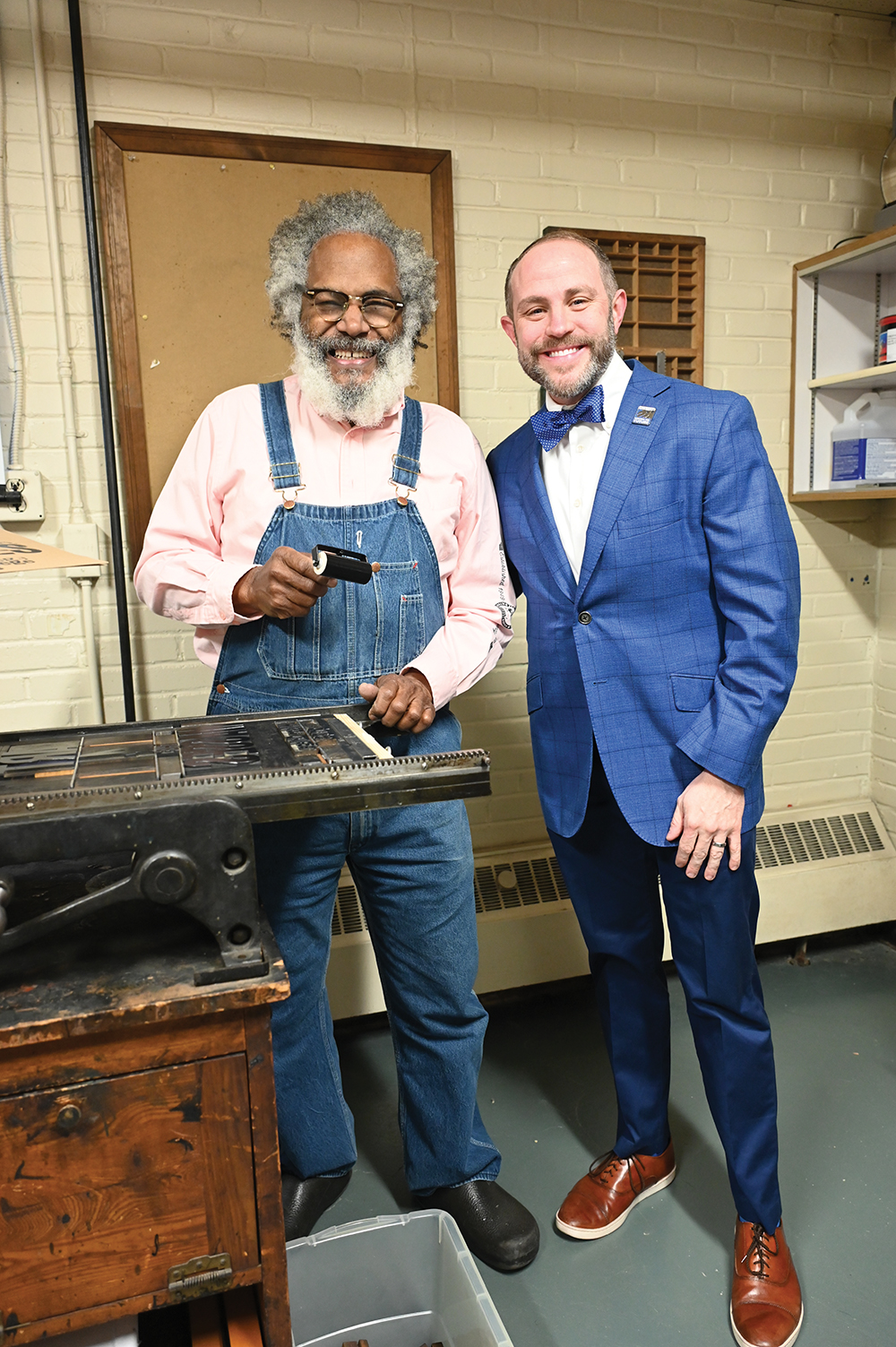
Visiting artist and printmaker Amos Paul Kennedy Jr. spent time on campus during ArtsFest, working with students at the print press and leading a Q&A session. Among those working alongside him was graphic design student Gavin Creamer ’28, who spent the day assisting Kennedy. The experience took shape through hands-on work, conversation, and an exchange beyond the press itself.
“It was a new experience for me,” Creamer said simply. What began as a workshop assignment evolved into something closer to an informal apprenticeship, blending technical skill-building, observation and reflection.
Kennedy is a visionary artist and educator who transforms letterpress printing into a vehicle for social justice and collective learning. Based in Detroit and trained at the University of Wisconsin–Madison, he is widely recognized for his prolific practice and commitment to making art accessible. His prints address race, labor, history, and community, often distributed affordably to reach beyond traditional gallery spaces.
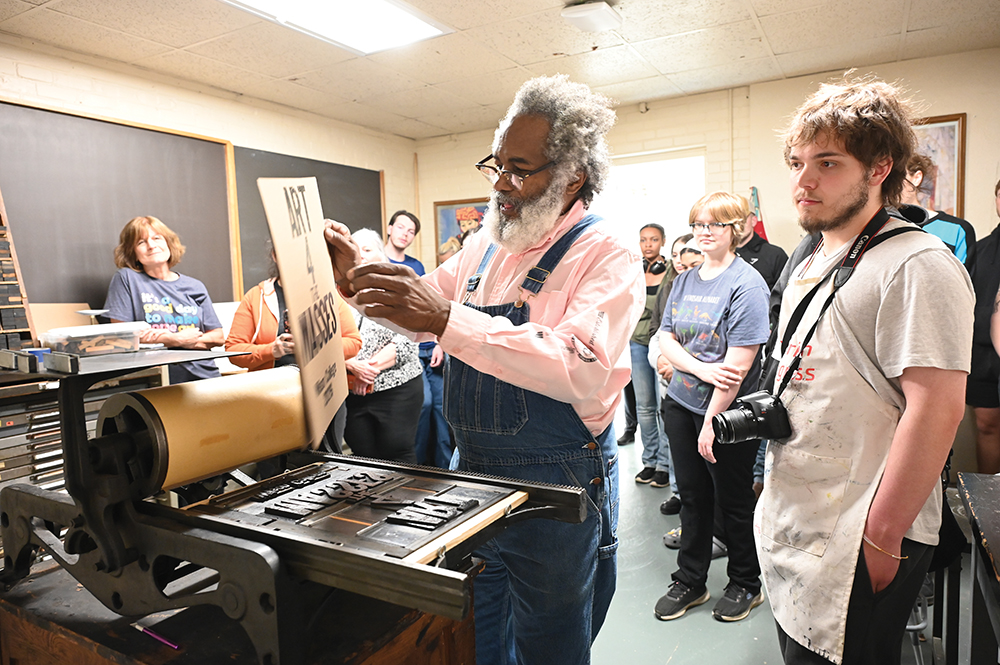
Adam DelMarcelle, M.F.A., assistant professor of graphic design, connected Kennedy’s work to the College’s mission.
“Amos Kennedy is an agent of justice, so by giving our students the chance to spend time with him, they gained a better understanding of a key component of the Wilson College mission,” DelMarcelle said. “Being an agent of justice means a lifelong commitment to the betterment of our
communities by being prepared to speak up, get involved, and take action.”
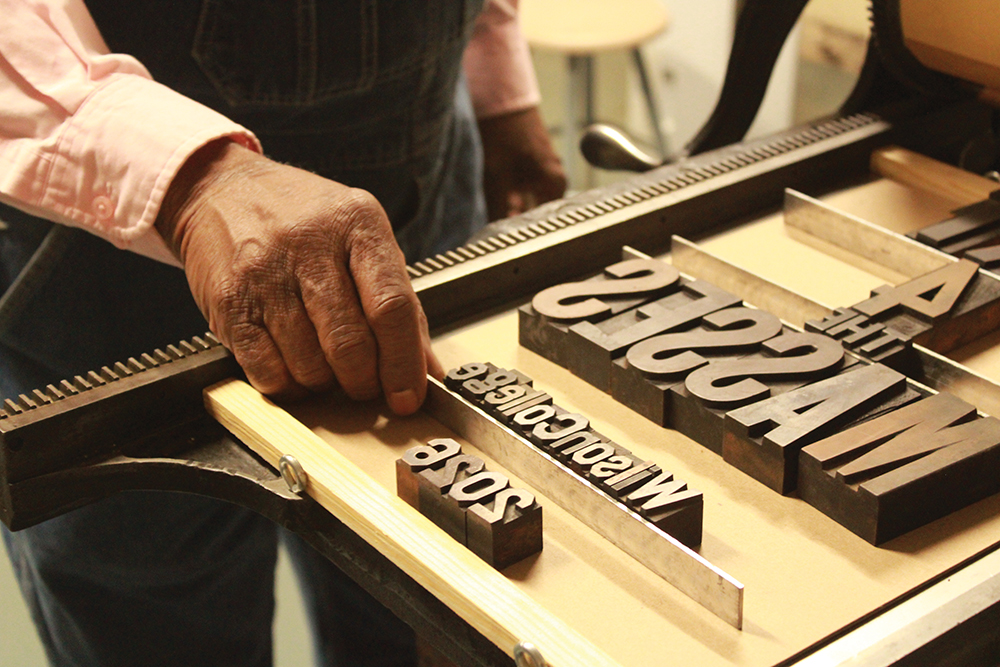
Working with handset wood and metal type, Kennedy embraces the physical labor and tactile beauty of traditional printing. He overprints vibrant colors in dense, rhythmic layers, allowing chance and repetition to shape meaning. No two prints are the same.
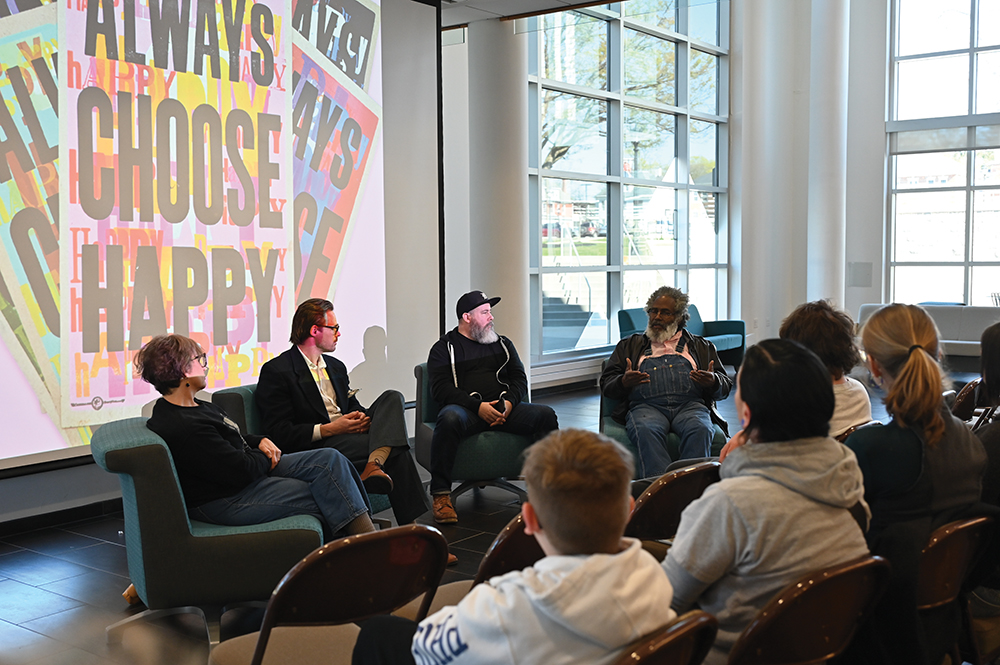
During his visit, the Wilson community engaged with Kennedy’s process through his art and through conversation during several events open to the public, including a gallery walk, a print workshop, and the artist Q&A session. There was also a showing of the documentary “Proceed and Be Bold” about Kennedy’s work and life. His art has been on display in the Bogigian Gallery since September in an exhibition called “Consider Everything an Experiment.”
For DelMarcelle, hosting Kennedy was also a meaningful professional moment: “As a mentor, it is one of my great joys to expose my students to artists I admire and who influence my work and practice. I have had the privilege of exhibiting alongside Amos, as well as having both of our work included in the book, “Strikethrough: Typographic Messages of Protest,” published by Letterform Archive.”
Creamer’s entry into the experience of working with Kennedy was almost casual. He and another student were selected to assist with the artist’s printmaking workshop. By midday, however, he found himself effectively apprenticing with Kennedy. After an initial demonstration, responsibility shifted.
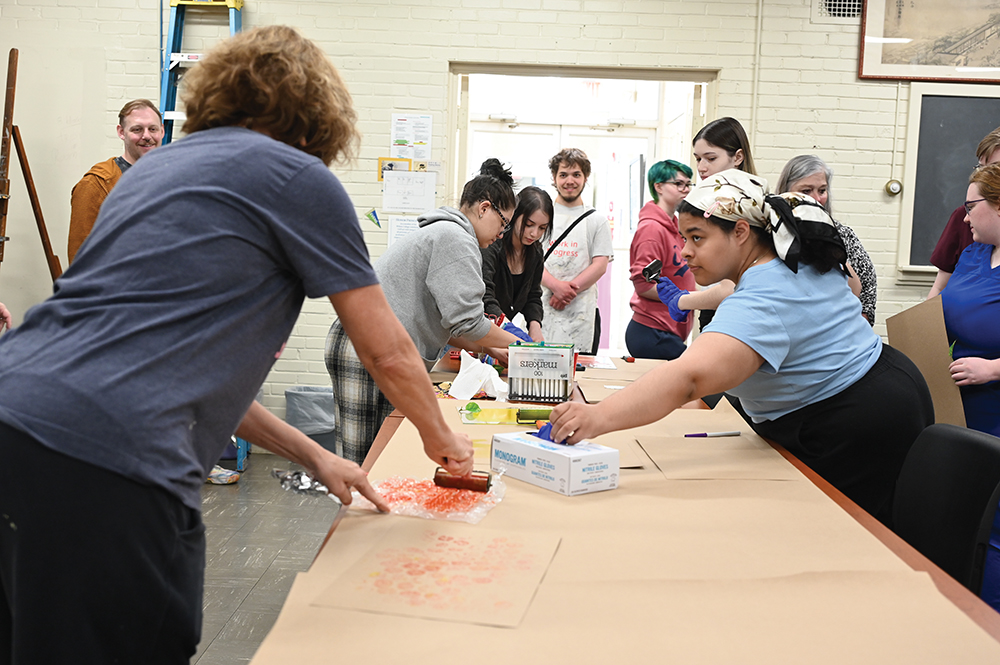
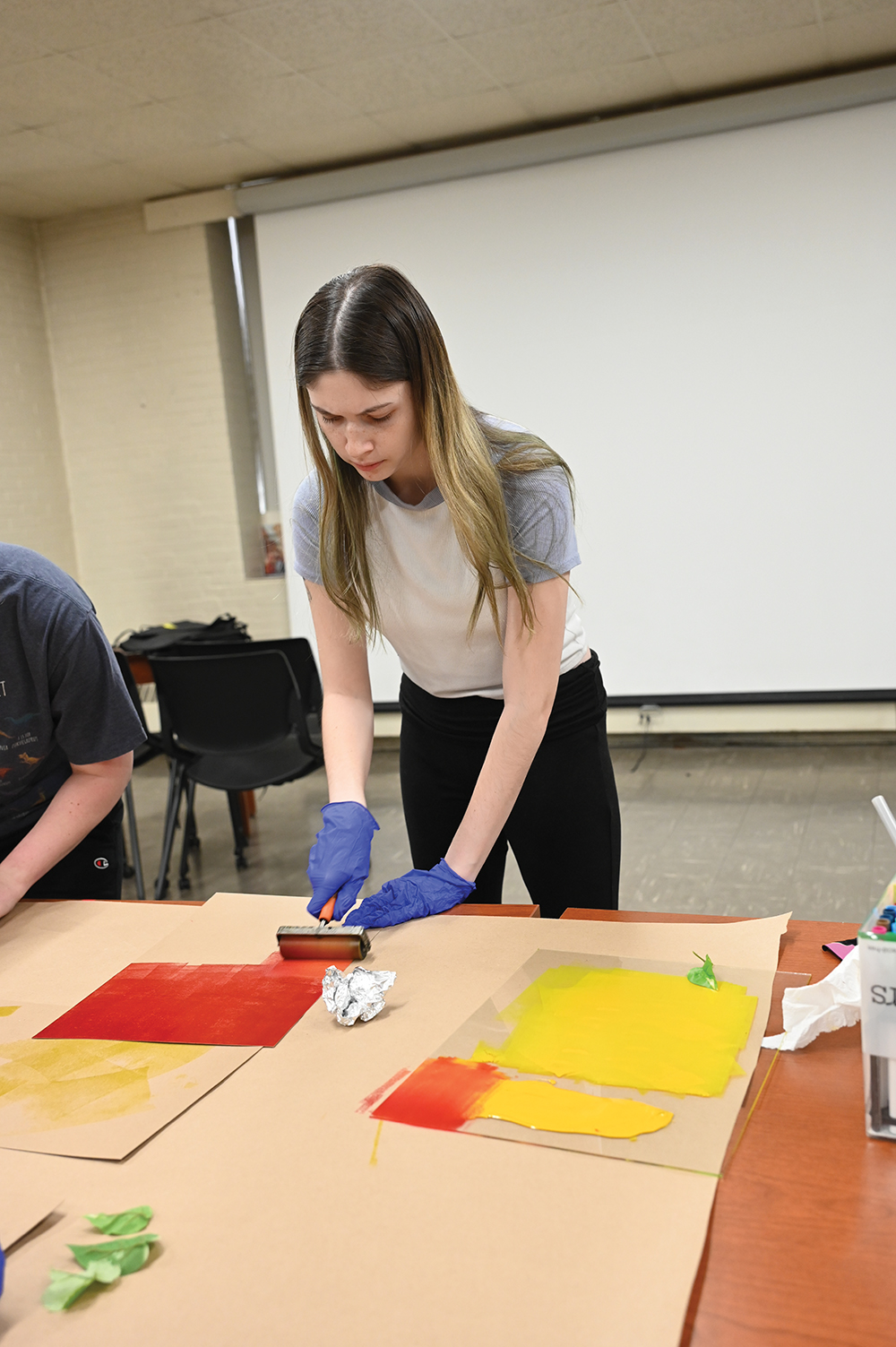
“He set up the whole thing, and then he just showed me how to do it,” Creamer recalled.
Adjusting ink, guiding those attending the workshop, and keeping the process moving, shifted Creamer’s role from spectator to participant.
“When I was there, Amos was sitting off to the side… so I took over,” he added. “He was talking with Professor DelMarcelle a lot of the time. I just took it in and did a lot of listening to him,” he said.
Kennedy, he noted, was “kind of a character” who was funny, unpredictable, and deeply engaged in conversation. Topics ranged widely and took unexpected turns. “We ended up talking about painting horseshoes,” he said. “I thought, okay, this is interesting.”
That unexpected mix of humor and seriousness stood out. It revealed to Creamer how an artist can be comfortable moving between experimentation and conviction.
Inside the gallery, however, Creamer noticed a recurring tension within Kennedy’s prints. Rather than presenting a single viewpoint, the work placed opposing ideas side by side.
“There was a good portion of it that was contradicting the other portion of the work,” he said. “It felt like he was bringing two sides to the table.”
As Kennedy described during the Q&A session, art is the transformation that takes place between the creator and the object, and between the viewer and the object.
This approach resonated deeply with Creamer’s own artistic instincts. In earlier projects, he had experimented with using familiar language and imagery but recontextualizing them to provoke new interpretations.
“As an artist, the best thing you can do is make people question things. I’ve tried to create that kind of space,” he said, “where people might not even realize they’re being challenged at first.”
After the day’s events, Creamer was invited to join Kennedy, DelMarcelle, and Philip Lindsey, professor of fine arts, for dinner. There, the conversation expanded beyond process into ethics, history, and the art world itself.
“We talked about museums, about where art comes from,” Creamer said. “Even about how some collections are tied to complicated histories.”
These discussions, though informal, connected the act of making art to larger cultural, economic, and political systems. But one moment stood out to Creamer.
“At one point, Amos said, ‘You do not master the craft. The craft allows you to master yourself.’”
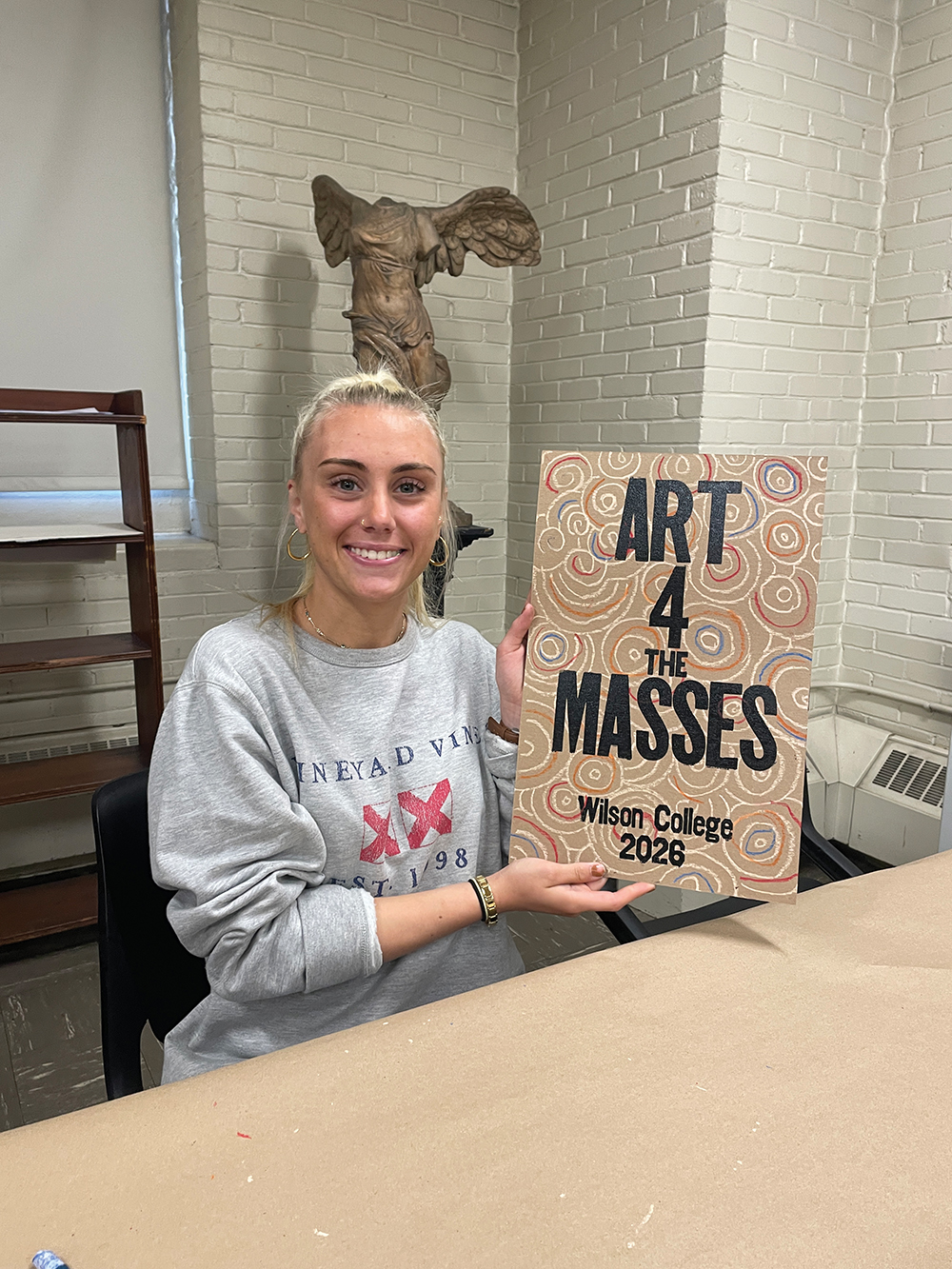
For Creamer, that statement echoed what he experienced during the morning workshop, when Kennedy encouraged variation and even imperfection as members of the Wilson community created prints reading “Art 4 the Masses Wilson College 2026.” Although every
participant worked with that same text, the results were strikingly varied
as they used the materials available in the studio.
“Not a single one was the same,” Creamer said. “The text was the same, but all the backgrounds were different. He encouraged that.”
As Kennedy emphasized to the Q&A audience, the artistic process begins not with perfect tools, but with what is available: “If you want to make something, you make it with what you have, not with what you want.”
The value of the work to Kennedy ultimately lies in connection, those small moments when an object resonates, sparks recognition, or simply brings joy. This emphasis on variation and individuality resonated deeply, and observing an artist who clearly enjoyed what he did left an impression on Creamer.
“Art is individual. No matter how you cut it, nothing is going to be the exact same as something else. I feel like that point was proven by Amos,” he said. “I also appreciated his outlook on jobs versus work. His point was to enjoy what you do. That’s been kind of my mission for most of my life. You want to always find what makes you happy and keep doing it.”
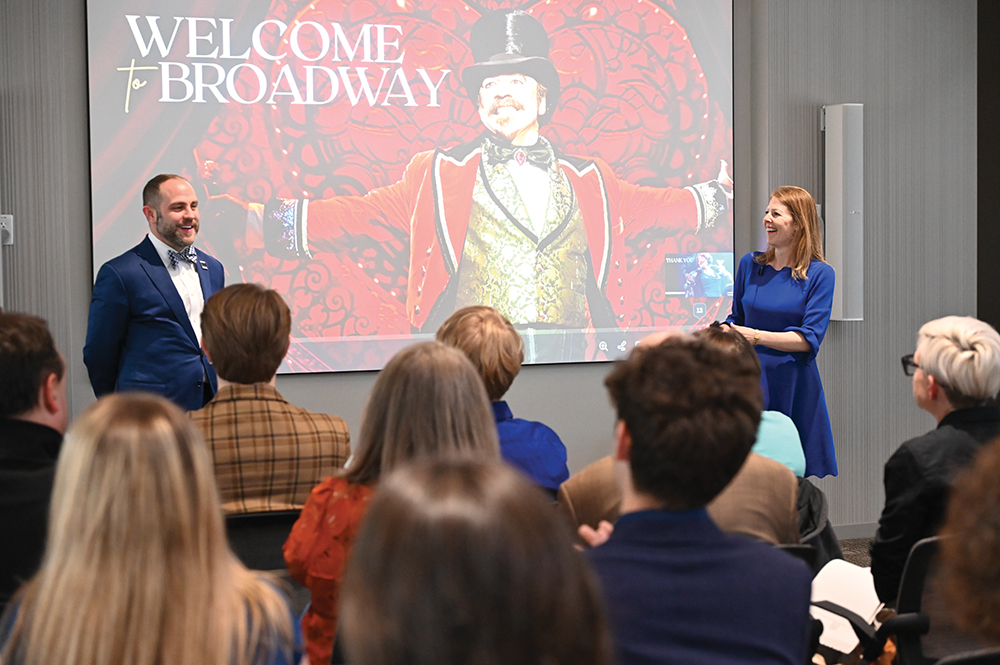
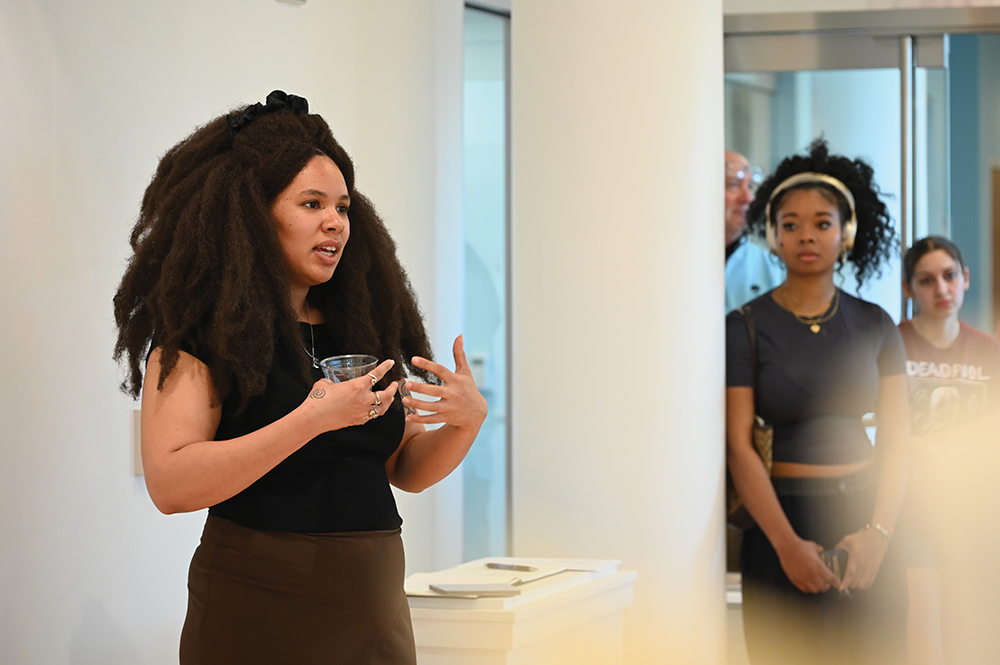
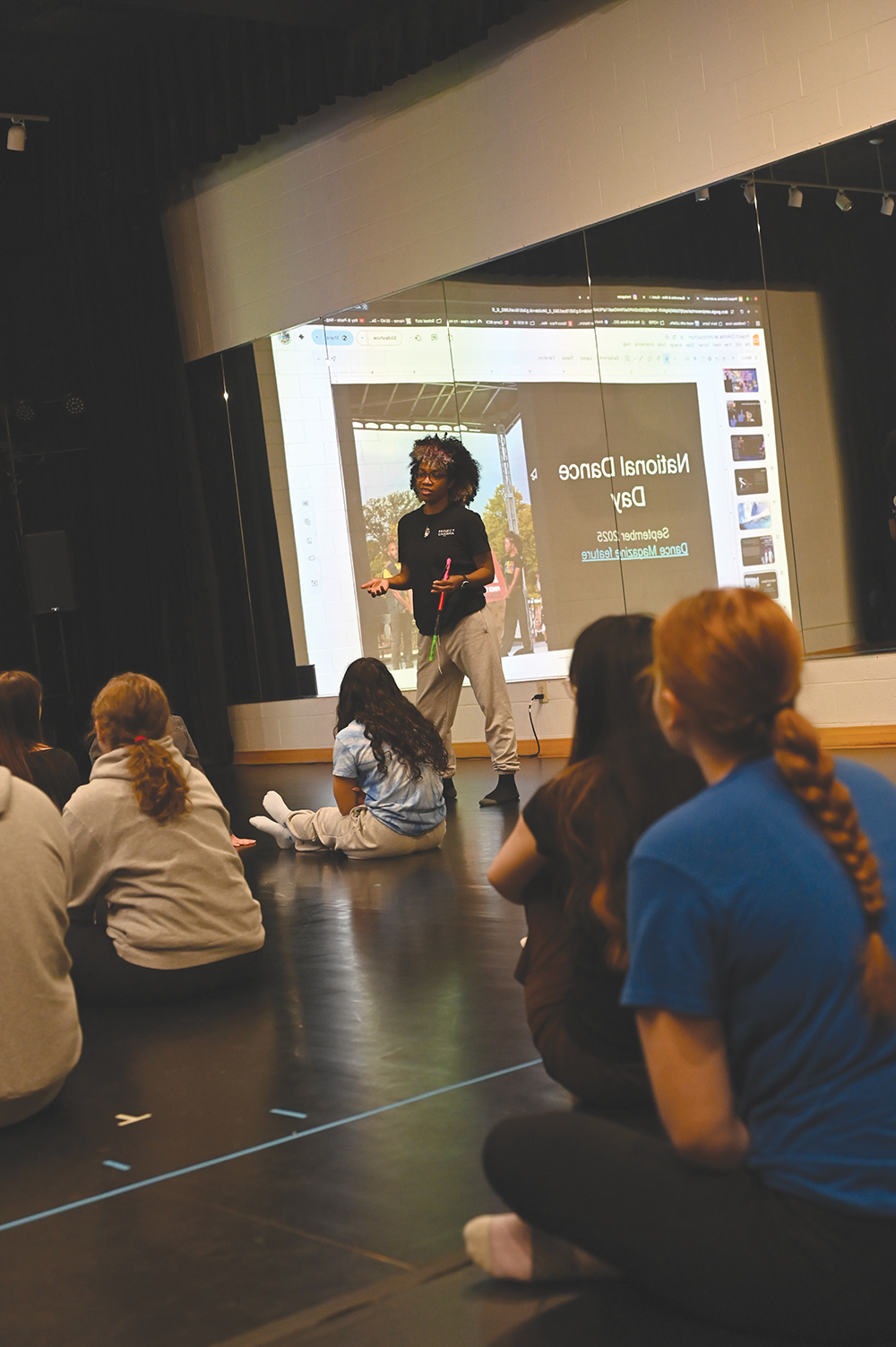
During ArtsFest 2026, the Wilson College community welcomed producer Sue Gilad for a look “Behind the Broadway Curtain” (top photo), visual artist Jada Patterson, who discussed her exhibit “A Seed’s A Star” in the Cooley Gallery ( photo below), and dancer Ama Law of Project ChArma, a dance theater company, who presented aworkshop on Spirit-Led Dance in the New America (bottom photo).