By Maxine Wagenhoffer, Ph.D., Director of the Hankey Center for the History of Women’s Education and Assistant Professor of History
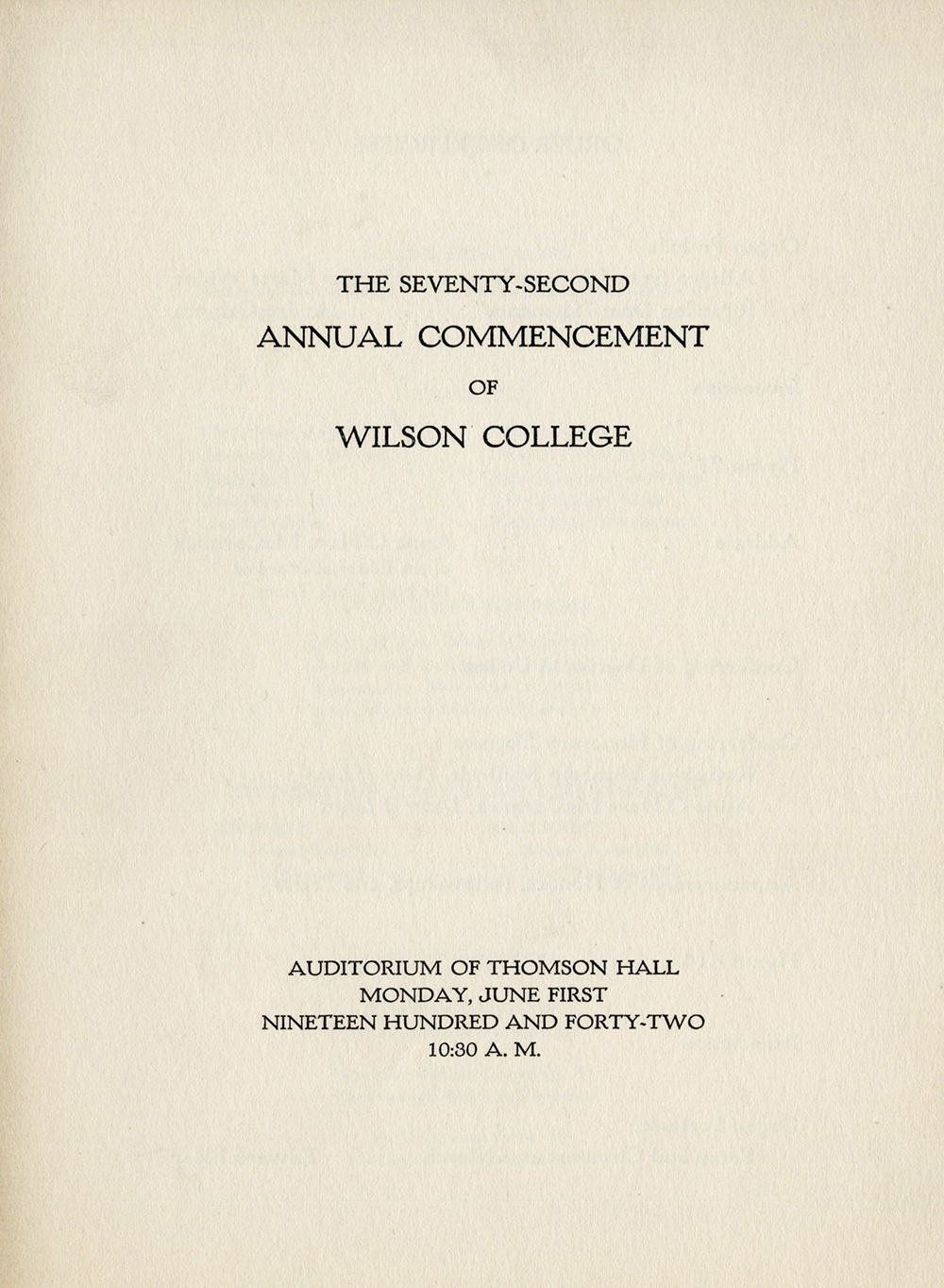
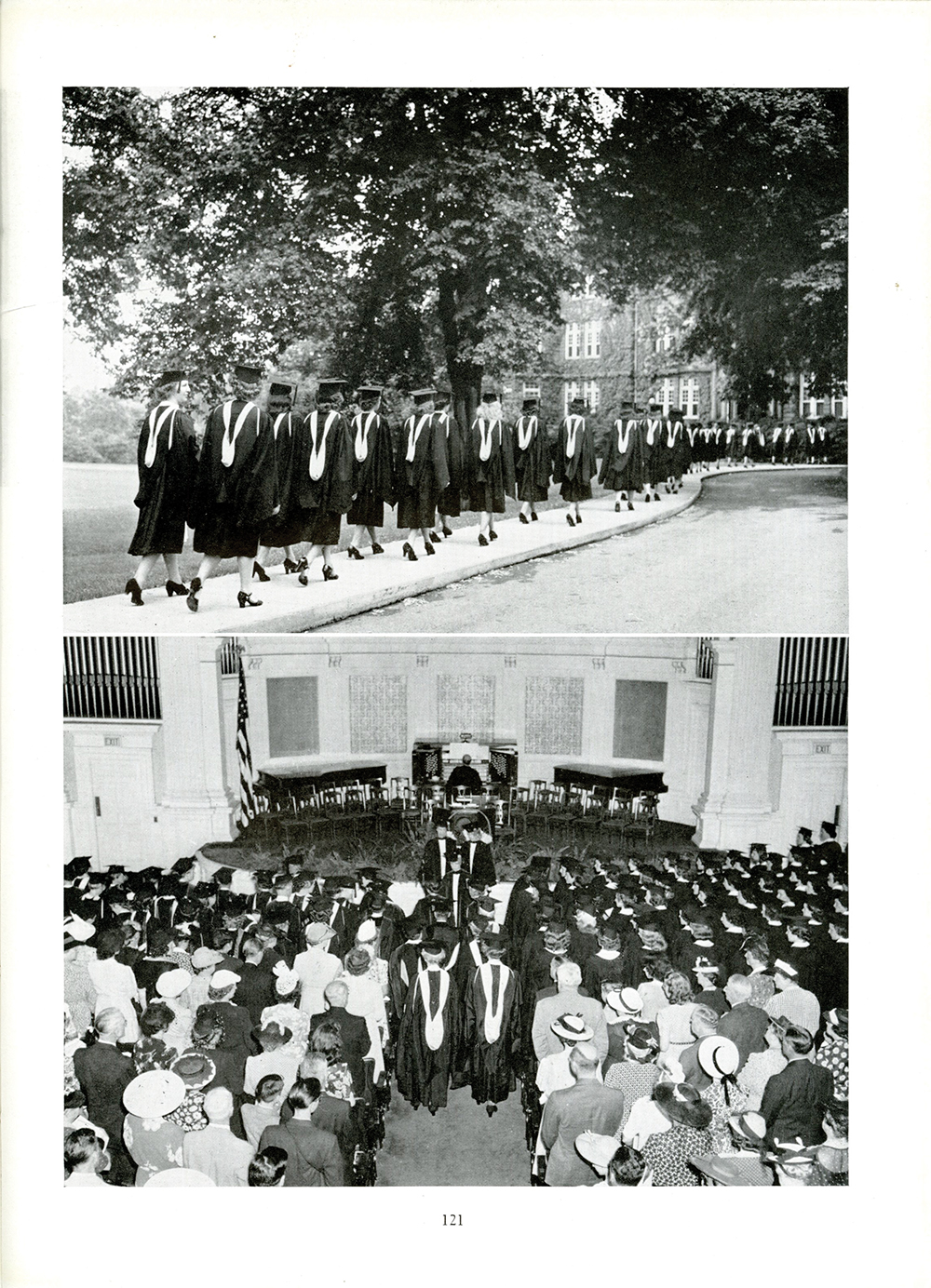
It was June 1, 1942. Wilson College was celebrating its seventy-second commencement. Months earlier, the attack on Pearl Harbor launched the United States into war. Wilson College was not insulated from the conflict. On December 9, 1941, President Paul Swain Havens addressed the College.(1) Havens declared, “You are asking what our part will be here at Wilson College. I do not know. It is too soon to know the full answer to that question, but we shall see more clearly in the coming months.”(2) In the aftermath of Pearl Harbor, Wilsonites got busy. Red Cross training became crucial on campus, along with the need for air raid shelters.(3) A lecture series focused on the role of liberties emerged.(4) No time was to be wasted for the women attending Wilson College.

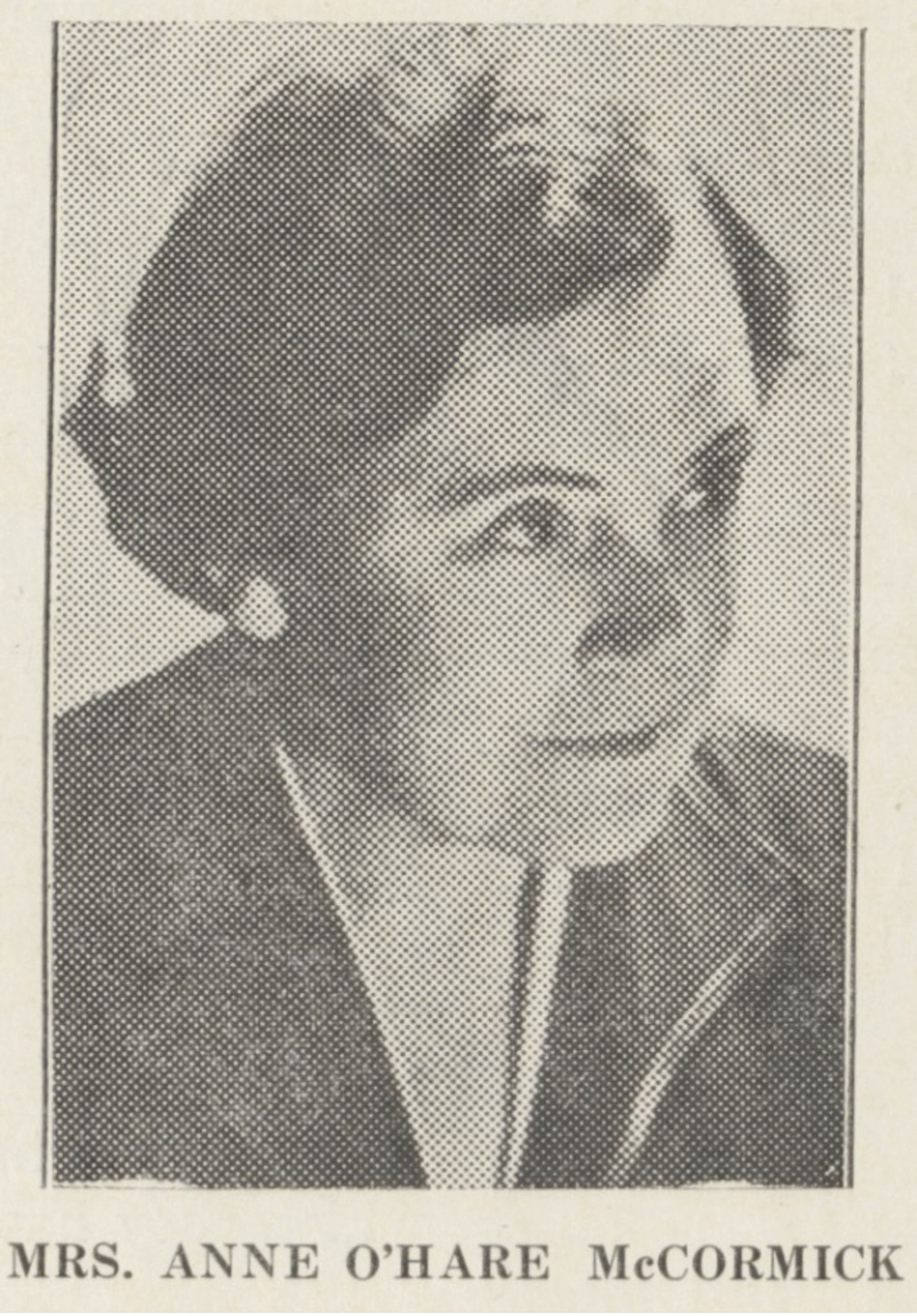
The war inevitably shaped the trajectories of the seniors graduating on that day. The commencement speaker was timely: Anne O’Hare McCormick, the renowned foreign news reporter for the New York Times.(5) McCormick won a Pulitzer Prize for her reporting in 1937. During her career, she interviewed individuals such as Adolf Hitler, Benito Mussolini, and Joseph Stalin. Additionally, she was a member of the famed newspaper’s editorial board.(6) Ultimately, McCormick was one of the most influential journalists in the world.
In her speech, McCormick did not mince words. McCormick stated, “You graduates of the historic year of 1942 have a right to ask searching questions, of your time, of your elders, of yourselves.”(7) It was a time for soul-searching. More aptly, perhaps, it was a time for action. “Never was our destiny so plain, so hard and so splendid before us. And never was your opportunity and responsibility as women so urgent,” maintained McCormick.(8) Women all over the United States contributed to the war effort, and Wilson women were no exception. In May 1942, the Public Opinion highlighted that a “gift…of $600 by Wilson College students, proceeds of the May Day exercises,” went toward a fundraising campaign by Franklin County’s Red Cross chapter; the donation enabled the chapter to surpass its $20,000 goal and increased Wilson College’s overall contribution to over $1,700.(9)
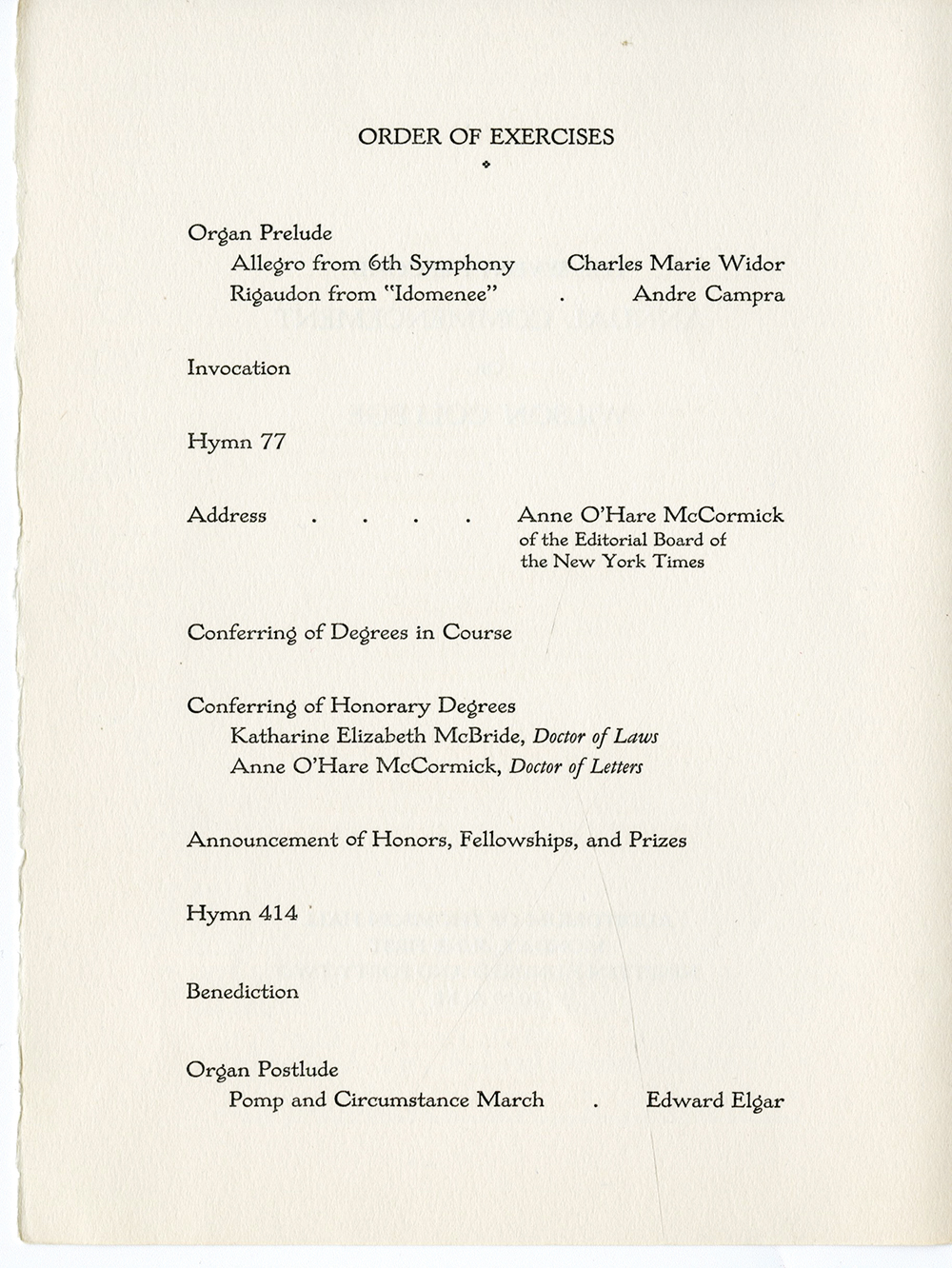
McCormick stressed that the stakes were high. “If Hitler wins, it is your life and your community he will dominate,” claimed McCormick. “In the ultimate sense,” McCormick continued, “you are fighting for yourselves.”(10) Wilson women could not be complacent with the current state of the world. McCormick also received an honorary doctorate from Wilson College. In her honorary degree citation for McCormick, Professor Dora Mae Clark emphasized, “Chief among her services as lecturer and journalist is that of interpreting the world in revolution in such a way as to inspire us with hope for the world of tomorrow.”(11)
McCormick bestowed her insights upon the Wilson community at a vital juncture in history.
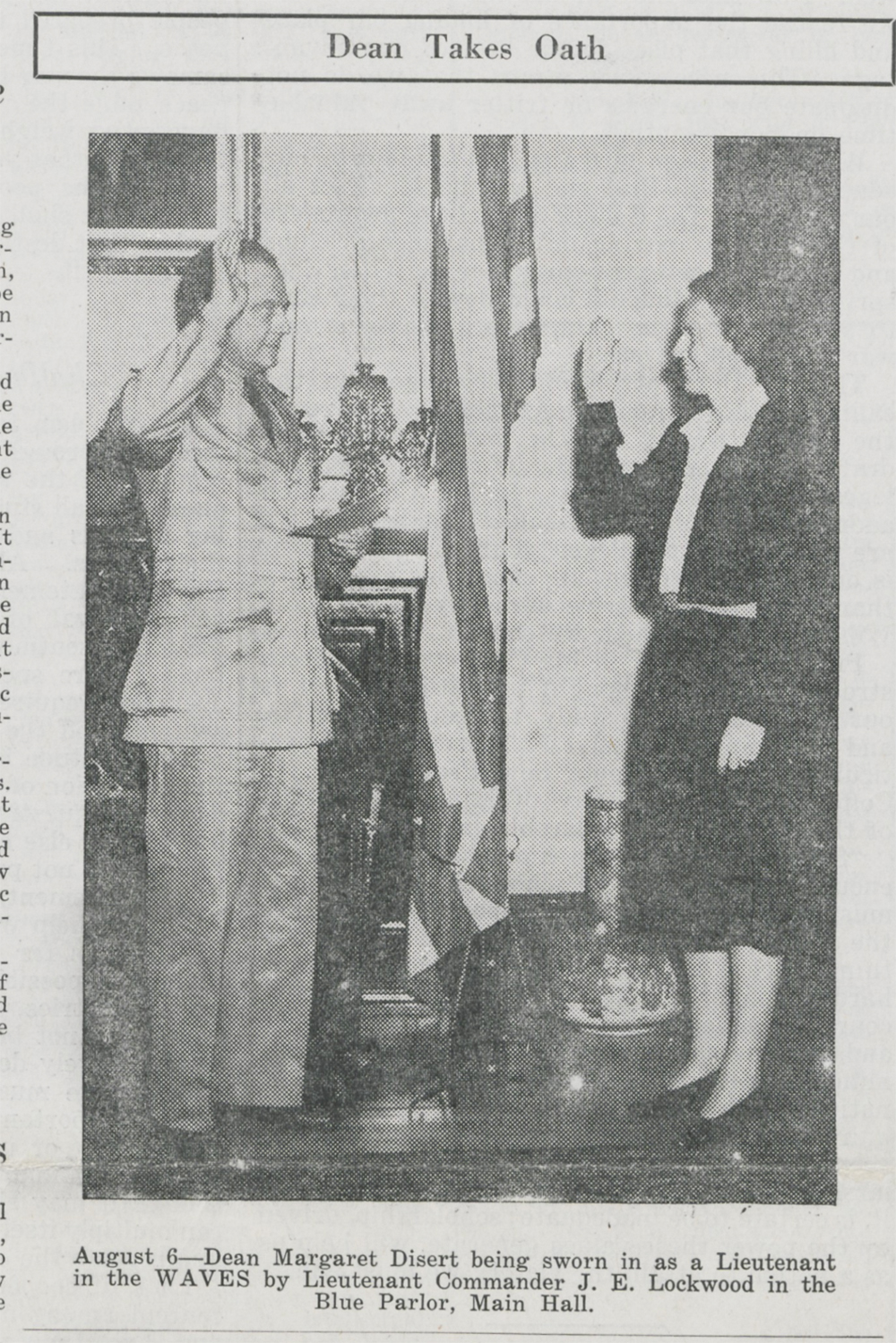
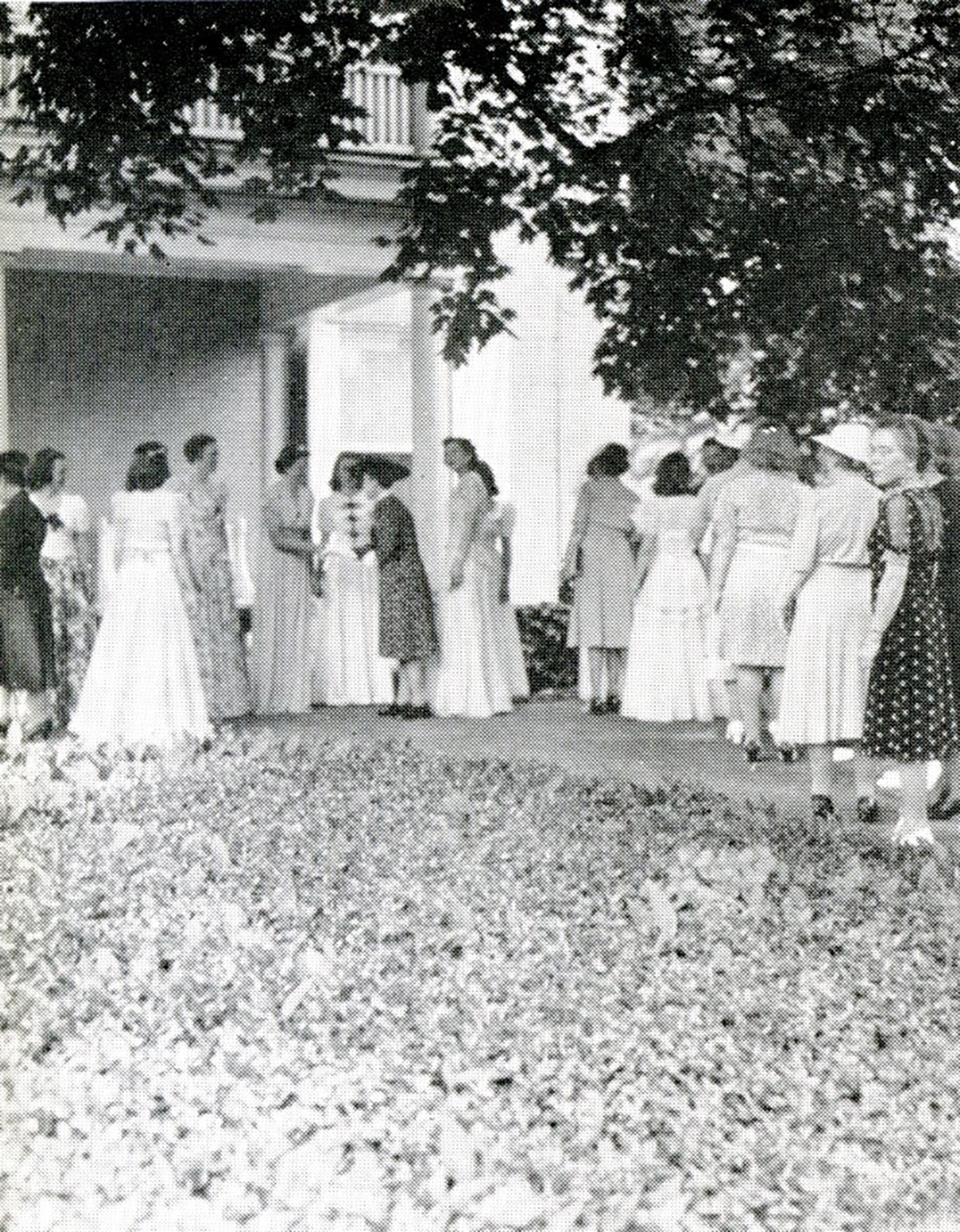
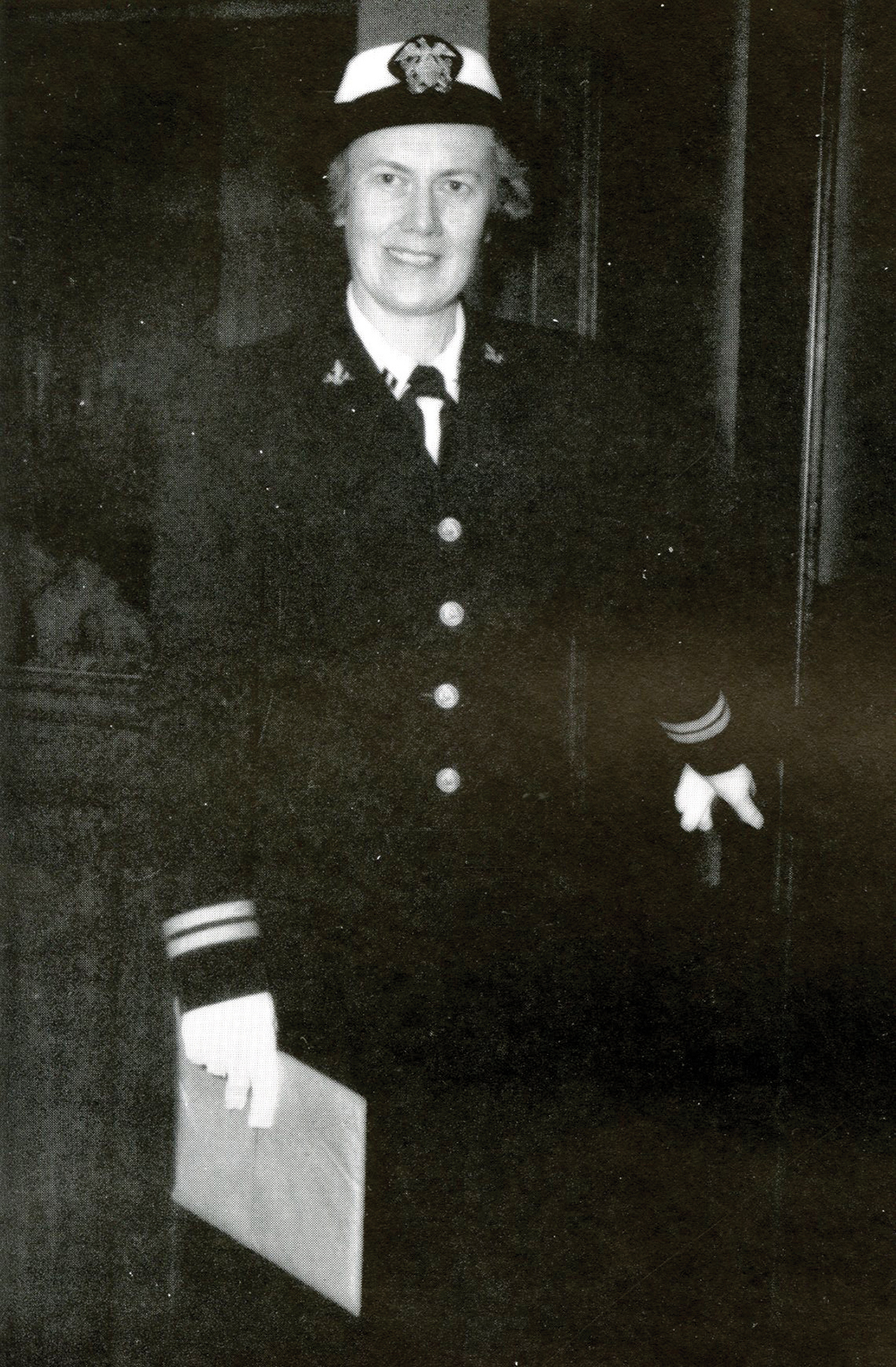
Wilson women left their mark during the global conflict. One prominent example is Margaret Criswell Disert ’20. Disert, Wilson College’s esteemed dean at the time, received a leave from the College to serve in the WAVES (Women Accepted for Volunteer Emergency Service).(12) In an article that described how “Wilson College students are contributing to the war directly and indirectly through Summer jobs and study,” the New York Times also stressed that “Disert will enter upon a new phase of her own contribution to the war.”(13) While Disert had devoted her energies to her alma mater through the years, it was now time for her to focus on serving her nation. In early August 1942, an editorial in the Public Opinion expressed, “Her departure from the community will be a matter for regret in many quarters, especially at Wilson College where her character and abilities are universally admired and recognized.”(14) Disert heeded McCormick’s call to action, setting an example for Wilsonites of all generations to follow.
Disert served admirably as a critical administrative officer in the WAVES, showcasing her attributes as a Wilson woman. In August 1946, the Public Opinion stated that “Disert was one of the first women called into naval service in 1942 and played a prominent part in organizing the women’s branch of the Navy.”(15) Disert helped to shape the impact that women had on the war effort. When she officially returned to her position at Wilson College in 1946, Disert looked to transform the lives of women yet again.
- “Wilson College and the War,” Wilson Alumnae Quarterly (February 1942): 3. Publications (WA-16). C. Elizabeth Boyd ’33 Archives, Wilson College.
- Paul Swain Havens, “We Shall Not Fail,” Wilson Alumnae Quarterly (February 1942): 4.
- “Wilson Is Taking Definite Part In National War Effort,” Wilson Alumnae Quarterly (February 1942): 7.
- “Series of Lectures on Origins of Liberties Feature of Defense Program,” Wilson Alumnae Quarterly (February 1942): 8-11.
- “78 Receive Degrees At Wilson College Ceremonies Today,” Public Opinion, June 1, 1942, 1, 2.
- For more on the career of McCormick, along with the work and legacies of other female journalists, see Brooke Kroeger, Undaunted: How Women Changed American Journalism (New York: Alfred A. Knopf, 2023).
- Anne O’Hare McCormick, “Commencement Address,” Wilson Alumnae Quarterly (August 1942): 11. Publications (WA-16). C. Elizabeth Boyd ’33 Archives, Wilson College.
- McCormick, “Commencement Address,” 13.
- “Wilson College Puts Red Cross Drive Over Top,” Public Opinion, May 6, 1942, 1, 6.
- McCormick, “Commencement Address,” 13.
- “Citation by Dr. Dora Mae Clark in Presenting Anne O’Hare McCormick for the Degree of Doctor of Letters,” Wilson Alumnae Quarterly (August 1942): 15.
- “Miss Disert Assumes New Position in WAVES,” Wilson Billboard, September 25, 1942, 1.
- “Broad War Work Aids Wilson Girls,” New York Times, August 16, 1942, D6.
- “Miss Disert Joins Up,” Public Opinion, August 7, 1942, 8.
- “Value Of Military Discipline Is Cited By Miss Disert,” Public Opinion, August 16, 1946, 5.